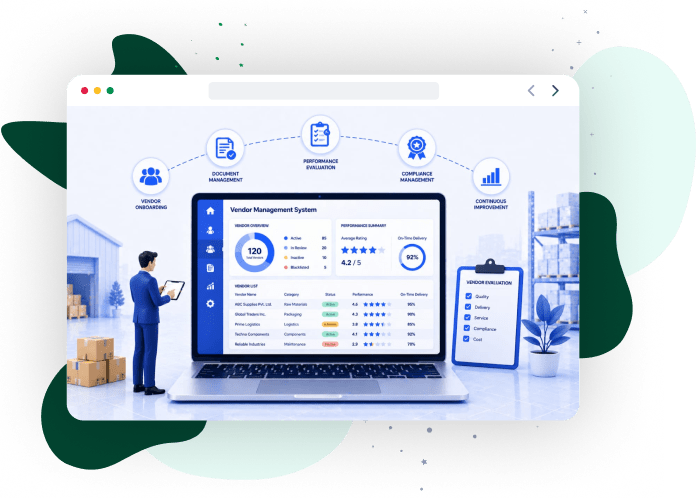
In this guide, we will explain how vendor management systems operate, which platform features drive governance efficiency, and how organizations evaluate implementation strategies. It also outlines VMS types, operational benefits, and development considerations for enterprises modernizing vendor administration.
Vendor governance requires digital platforms that coordinate supplier data, compliance monitoring, and procurement workflows across complex vendor ecosystems.

Develop a tailored vendor management system designed to align vendor governance, procurement operations, and supplier collaboration across enterprise environments.
Get Custom BuildSystematic Vendor Management: Facts, Capabilities, Essentials
Organizations manage expanding vendor networks through structured vendor governance and centralized vendor management systems. Research from Fortune Business Insights reports that 40% of businesses use more than 50 SaaS applications. Each application introduces vendor contracts, licensing terms, and compliance obligations that organizations must track. Without centralized oversight, vendor administration quickly becomes complex.
A vendor management system (VMS) automates vendor onboarding, contract administration, and performance monitoring through structured procurement workflows. These workflows track service-level commitments, enforce supplier compliance requirements, and maintain consistent vendor records across procurement operations.
Organizations encounter recurring vendor governance challenges before adopting digital vendor management platforms:
Vendor information is stored across multiple procurement systems
Limited visibility into vendor contract obligations and renewal timelines
Manual supplier compliance verification and documentation tracking
Inconsistent vendor performance tracking across business units
Procurement teams gain structured workflows for vendor onboarding automation, vendor contract management, and third-party risk management.
Vendor management systems integrate with broader supply chain management solutions through APIs that connect procurement systems, supplier relationship platforms, and analytics environments.
Key Features That Define Effective Vendor Management Platforms
Centralized vendor management systems eliminate fragmented administration by consolidating supplier records, compliance documentation, and contract oversight. Standardized vendor administration improves coordination across procurement departments and supply chain operations.
Core vendor management features include:
Vendor onboarding automation
Digital workflows collect vendor information, certifications, and compliance documents during onboarding.
Contract lifecycle management
Platforms track vendor agreements, renewal timelines, and service obligations through structured contract repositories.
Vendor performance tracking
Scorecards measure service quality, delivery reliability, and supplier responsiveness across vendor relationships.
Document management and compliance records
Centralized repositories store vendor documentation, audit trails, and regulatory certifications.
Vendor self-service portals
Suppliers update records, submit documents, and communicate through controlled digital environments.
Effective platforms integrate these capabilities with procurement workflows and financial systems. Many enterprises deploy vendor management platforms alongside enterprise procurement software platforms that coordinate sourcing, purchasing, and supplier collaboration.
Driving Measurable Results Across Industries
From automating manual calculations to modernizing legacy infrastructure, we build software that directly impacts the bottom line. Our custom solutions consistently reduce operational costs and accelerate process efficiency.
View Our Case Studies
Types of Vendor Management Systems
Vendor ecosystems vary across industries, procurement models, and workforce structures. Organizations deploy different VMS types depending on operational requirements, supplier complexity, and sourcing strategy. Selecting the appropriate vendor management system ensures the platform aligns with the organization’s procurement structure, vendor categories, and workforce programs.
The table below outlines common vendor management system types used in enterprise supply chain environments.
| VMS Type | Primary Purpose | Typical Users | Core Capabilities |
|---|---|---|---|
| Staffing Vendor Management System | Manages contingent workforce vendors and staffing agencies | HR teams, procurement leaders | Contractor onboarding, time tracking, and workforce compliance |
| Direct Procurement VMS | Oversees vendors supplying production materials or manufacturing inputs | Supply chain managers, procurement teams | Supplier coordination, vendor performance tracking, procurement workflows |
| Indirect Procurement VMS | Manages vendors providing operational services and non-production goods | Finance teams, procurement teams | Contract lifecycle management, vendor onboarding automation, and spend tracking |
| Multi-Vendor Governance Platform | Coordinates vendors across multiple departments and supplier tiers | Enterprise IT and procurement teams | Vendor lifecycle management, compliance monitoring, supplier analytics |
Many organizations integrate vendor governance into broader digital sourcing software systems that coordinate supplier discovery, sourcing decisions, and vendor onboarding workflows.
Understanding these vendor management system types allows enterprises to select platforms aligned with procurement complexity, vendor lifecycle management requirements, and supplier relationship governance objectives.
Business Benefits of Vendor Management Software
Manual vendor oversight distributes supplier information across spreadsheets, emails, and disconnected procurement tools. This fragmentation reduces transparency and weakens vendor accountability. Vendor management software centralizes vendor records and operational metrics within a single governance environment.
Digital procurement initiatives can generate $16.3 million in annual savings, representing approximately 6.5% of addressable enterprise spend. Research from Zycus shows that automated procurement and supplier management platforms significantly improve financial efficiency across vendor ecosystems.
The primary benefits of vendor management software arise through structured vendor lifecycle control:
Centralized vendor governance that standardizes supplier onboarding, evaluation, and contract management processes.
Clear vendor visibility through consolidated supplier records and performance metrics used for procurement decisions.
Automated contract oversight that tracks service obligations, compliance requirements, and renewal schedules.
Consistent supplier performance evaluation using standardized scorecards and measurable performance indicators.
Early vendor risk identification through continuous monitoring of compliance, operational disruptions, and contractual deviations.
Vendor management platforms often integrate with procurement process optimization systems that streamline sourcing workflows and supplier collaboration. These capabilities allow procurement teams to manage vendor networks using verified operational data. Supplier decisions rely on measurable performance indicators rather than fragmented records or manual reporting.
Cost Savings and Efficiency Gains With Vendor Management Systems
Vendor management systems reduce administrative overhead and manual coordination by replacing spreadsheets and email approvals with automated onboarding workflows, contract tracking, and compliance documentation management.
Automation within vendor management systems supports the following operational capabilities:
- Automated vendor onboarding reduces manual document verification and supplier data entry.
- Centralized contract management prevents missed renewals and uncontrolled vendor spending.
- Vendor performance tracking identifies underperforming suppliers and renegotiation opportunities.
- Consolidated spend reporting enables procurement leaders to analyze vendor costs across departments.
Procurement teams strengthen financial oversight when vendor systems integrate with purchase order management software that records transactions and vendor commitments. Spend analytics generated by VMS identify redundant vendors, highlight contract optimization opportunities, and expose uncontrolled purchasing activity.
Visibility and Control Over Vendor Relationships
Vendor management systems centralize supplier records, compliance documentation, and performance metrics across vendor networks. Real-time dashboards display vendor activity, performance indicators, and compliance status across procurement operations.
Research from Ardent Partners reports that 49% of procurement leaders observe improved supplier performance after implementing structured supplier management initiatives. The finding highlights how coordinated vendor governance programs strengthen supplier collaboration and operational performance across procurement networks.
Vendor management platforms provide operational data visibility through the following capabilities:
| Capability | Operational Insight | Governance Outcome | Business Impact |
|---|---|---|---|
| Vendor performance dashboards | Supplier delivery metrics and service-level compliance | Consistent vendor performance tracking | Improved supplier reliability |
| Contract visibility | Contract terms, renewal dates, obligations | Controlled vendor contract management | Reduced compliance risk |
| Engagement monitoring | Supplier activity and collaboration records | Structured vendor lifecycle management | Stronger supplier relationships |
| Reporting and analytics | Vendor spend patterns and performance benchmarks | Data-driven vendor governance | Strategic sourcing optimization |
Vendor management systems integrate vendor performance tracking with supplier relationship management platforms through shared supplier records and performance analytics, enabling consistent vendor oversight across procurement operations.
Compliance and Security in Vendor Management Solutions
Vendor management systems enforce compliance oversight across supplier contracts, certification records, and operational controls by embedding compliance verification and security governance into vendor onboarding, contract administration, and supplier monitoring workflows.
Research from Fortune Business Insights reports that 5% of enterprises operate more than 250 SaaS tools, highlighting how fragmented vendor ecosystems increase governance complexity and require structured vendor oversight platforms.
Digital vendor governance platforms centralize documentation, audit trails, and supplier verification records across procurement environments. Centralized compliance records and audit logs enable regulatory reporting and third-party risk monitoring across vendor networks. Vendor management systems integrate with supply chain compliance management frameworks through shared compliance records, audit logs, and supplier verification data.
Ensuring Compliance With Regulatory Standards
Vendor management systems support regulatory compliance by maintaining verifiable records of vendor certifications, contracts, and operational controls across onboarding, contract administration, and supplier monitoring workflows.
Digital compliance governance within a vendor management system typically includes:
- Automated vendor documentation tracking for certifications, insurance records, and regulatory declarations.
- Structured audit trails capturing vendor approvals, contract changes, and procurement decisions.
- Policy-driven vendor onboarding automation validating supplier eligibility before procurement engagement.
- Continuous compliance monitoring detecting expired certifications or regulatory violations.
These capabilities embed regulatory requirements directly into vendor workflows.
Strengthening Security and Managing Vendor Risks
Vendor risk controls are designed to monitor supplier access, track operational activities, and ensure compliance across procurement systems. Data from the Ponemon Institute highlights that 59% of organizations assess third-party vendors primarily through contractual security and privacy commitments. This reliance on contracts alone highlights the need for structured governance systems that continuously monitor vendor access, operational behavior, and compliance risks across supplier ecosystems.
Security governance is embedded into vendor onboarding, access management, and procurement workflows.
Vendor security controls include the following capabilities:
| Security Control | Operational Function | Risk Mitigated | Governance Outcome |
|---|---|---|---|
| Role-based access control | Restricts vendor access to systems, documents, and data environments | Unauthorized system access | Controlled supplier data exposure |
| Vendor risk scoring | Evaluates suppliers based on compliance history, cybersecurity posture, and operational reliability | High-risk vendor engagement | Informed vendor selection decisions |
| Incident response workflows | Tracks security incidents, contract breaches, and supplier disruptions | Delayed incident remediation | Faster risk containment |
| Continuous monitoring dashboards | Provides real-time visibility into vendor activity and compliance status | Undetected operational risks | Proactive risk management |
Some organizations enhance vendor risk monitoring by using technologies such as blockchain in supply chain operations to record supplier transactions and compliance verification events.
Structured vendor risk management enables organizations to detect threats earlier, enforce security policies consistently, and maintain operational resilience across complex vendor ecosystems.
Vendor Management for Contingent and Extended Workforce
Vendor management systems support contingent workforce programs by managing contractor onboarding, agency engagement, workforce activity tracking, and compliance monitoring within centralized workflows. These systems help organizations maintain contractor compliance, enforce agency policies, and monitor workforce performance across distributed programs.
Vendor management systems integrate with supply chain automation platforms that synchronize procurement workflows, supplier collaboration, and contingent workforce operations.
Contingent Workforce Management Made Simple with VMS
Vendor management systems centralize contractor administration, agency coordination, and compliance oversight. It maintains contractor credentials, assignments, and documentation within a controlled governance environment.
Contingent workforce governance relies on the following operational capabilities:
- Contractor onboarding workflows that capture credentials, certifications, and contractual agreements before workforce engagement.
- Assignment tracking systems that monitor contractor deliverables, project milestones, and contract duration.
- Time and activity reporting tools that validate workforce contributions across consulting and staffing engagements.
- Policy enforcement controls verifying contractor compliance with security protocols and internal requirements.
Integration with order management software synchronizes contractor assignments, project deliverables, and service transactions across vendor engagements.
Integration With HR and Procurement for Unified Vendor Oversight
Integrated enterprise systems synchronize vendor contracts, workforce assignments, and procurement transactions across vendor management environments. Synchronized data flows connect vendor management systems with HR platforms and procurement infrastructure across enterprise environments. Contractor records, supplier agreements, and procurement transaction data synchronize across integrated enterprise systems.
Enterprise integration relies on the following operational capabilities:
| Integration Capability | Operational Function | Governance Outcome | System Impact |
|---|---|---|---|
| Single sign-on authentication | Shared identity verification across HR, procurement, and vendor systems | Controlled user access | Reduced credential duplication |
| Automated workflow synchronization | Vendor approvals and contractor onboarding move across systems | Coordinated procurement and workforce administration | Faster process execution |
| Vendor and workforce data exchange | Supplier records and contractor profiles synchronize between platforms | Centralized supplier and workforce record management | Accurate vendor lifecycle records |
| Unified reporting and analytics | Vendor spend, performance, and workforce metrics aggregate across systems | Consolidated operational insight | Strategic sourcing and workforce planning |
Integration with enterprise eProcurement systems synchronizes sourcing workflows, supplier purchasing, and vendor transaction tracking across procurement environments.
How to Develop Vendor Management Software
Vendor management software development defines governance requirements, integration needs, and operational workflows before platform implementation. Defined requirements guide the development of scalable vendor management systems supporting procurement automation and supplier coordination.
A development framework for vendor management software includes:
Requirement discovery, identifying vendor governance challenges, compliance obligations, and procurement workflows.
System architecture design defines data structures, integration layers, and vendor administration workflows.
Platform development and configuration, implementing vendor onboarding workflows, contract administration, and performance monitoring.
Integration and deployment connecting vendor systems with procurement, HR, and analytics platforms.
Operational support and optimization, maintaining system performance, vendor data accuracy, and governance controls.
Vendor management software development often integrates with digital supply chain transformation initiatives that modernize procurement operations and supplier collaboration across enterprise systems.
Scalability, Customization, and Usability To Support Growth
Scalable Vendor Management Infrastructure
Businesses of all sizes, from small firms managing a few suppliers to global enterprises coordinating hundreds of vendors, require systems that scale with operational growth. For example, a manufacturer expanding into new regions may need to onboard dozens of suppliers within months. Without scalable infrastructure, procurement teams often resort to spreadsheets and disconnected tools, leading to fragmented vendor data and delayed approvals.
Configurable Compliance and Approval Workflows
Customization enables organizations to configure approval structures and compliance requirements according to internal policies and regional regulations. For instance, a logistics company operating across multiple countries may require different documentation standards for regional suppliers. Without configurable controls, procurement teams rely on manual adjustments that slow vendor governance and increase compliance risk.
User-Friendly Supplier Onboarding Systems
Usability determines whether procurement teams and external suppliers can adopt the system efficiently. Complex vendor portals often lead to incomplete submissions and delayed onboarding. Intuitive dashboards and guided interfaces allow suppliers and administrators to complete required tasks quickly, improving participation and maintaining accurate vendor information.
Designing Effective Vendor Portals for Maximum Engagement
Vendor portals shape how suppliers interact with vendor management systems. Intuitive interfaces, guided onboarding flows, and real-time status visibility reduce process friction and help suppliers complete registration, documentation, and approval tasks efficiently. Clear workflows improve procurement efficiency while increasing supplier participation and satisfaction.
Poorly designed portals often lead to incomplete submissions, repeated status inquiries, and slower onboarding cycles. User-centric portal design addresses these issues by simplifying document uploads, clarifying workflow steps, and providing transparent approval tracking.
Vendor portal functionality typically includes the following capabilities:
| Portal Capability | Operational Function | Vendor Benefit | Governance Outcome |
|---|---|---|---|
| Digital onboarding interface | Collects vendor profiles, certifications, and contracts | Simplified vendor registration | Standardized vendor onboarding |
| Document submission workspace | Enables suppliers to upload compliance and operational documents | Faster documentation exchange | Controlled compliance monitoring |
| Real-time status tracking | Displays approval status for contracts and onboarding workflows | Transparent process visibility | Reduced vendor inquiry overhead |
| Secure communication channels | Supports direct communication between vendors and procurement teams | Faster issue resolution | Structured vendor collaboration |
Integration with supply chain visibility platforms supports supplier performance tracking, shipment coordination, and operational metrics across vendor networks.
AI and Cloud-Based Innovations in Vendor Management
AI capabilities within vendor management platforms analyze supplier behavior, contract performance, and procurement transactions across vendor networks. Automated pattern detection and predictive risk monitoring support supplier evaluation. Cloud-native deployment extends vendor analytics and automation capabilities across distributed procurement environments and vendor ecosystems.
AI and cloud platforms support the following vendor management capabilities:
Vendor performance analytics identifying delivery delays, contract deviations, and supplier reliability patterns
Automated spend analysis detecting vendor cost patterns across procurement transactions
Predictive risk monitoring flagging potential supplier disruptions and compliance risks
Automated workflow orchestration coordinating vendor onboarding approvals and contract validation
Leveraging AI and Cloud-Based Platforms for Smarter Vendor Oversight
AI-powered analytics help procurement teams interpret vendor data across performance records, compliance documentation, and procurement transactions. By analyzing these datasets continuously, AI systems identify supplier performance trends, highlight contract deviations, and surface operational risks earlier than manual reviews.
AI-driven vendor analytics support the following operational capabilities:
- Automated vendor performance scoring that ranks suppliers using delivery accuracy, service reliability, and compliance metrics.
- Compliance anomaly detection that identifies expired certifications, contract violations, or regulatory inconsistencies.
- Procurement spend optimization models that analyze vendor cost patterns across procurement transactions.
- Operational forecasting engines that detect supply disruptions through predictive vendor risk indicators.
Cloud platforms provide continuous system access, automated platform updates, and collaborative vendor engagement across departments and supplier networks.
Key Features of a Successful Vendor Portal Workspace
Portal architecture simplifies document exchange, onboarding procedures, and communication between vendors and procurement teams.
Vendor portal workspaces support the following operational capabilities:
Document upload interfaces enabling vendors to submit certifications, contracts, and compliance records securely
Guided onboarding workflows, directing suppliers through registration, verification, and approval steps
Real-time workflow status tracking, displaying onboarding progress, contract approvals, and compliance verification
Secure messaging channels supporting direct communication between suppliers and vendor administrators
Vendor portal workspaces frequently synchronize operational records with enterprise inventory management systems that track supplier deliveries, material availability, and procurement transactions across supply chain operations.
Training, Support, and Case Studies for VMS Success
Well-designed training materials help procurement teams and suppliers understand system features, workflows, and compliance requirements, leading to faster adoption and fewer errors.
Ongoing support, such as help desks, documentation, and troubleshooting resources, ensures users can resolve issues quickly and continue operations without disruption. Additionally, case studies demonstrate practical use cases and proven outcomes, helping stakeholders see the value of the VMS and adopt best practices with greater confidence. Together, these elements drive user engagement, improve efficiency, and maximize the overall effectiveness of the system.
Effective training and support programs include:
| Support Component | Operational Role | Governance Benefit | Adoption Impact |
|---|---|---|---|
| User onboarding programs | Introduce procurement teams and suppliers to platform workflows | Faster vendor system adoption | Reduced operational errors |
| Vendor training resources | Guide suppliers through document submission and compliance steps | Consistent supplier participation | Improved vendor onboarding efficiency |
| Responsive technical support | Resolves platform issues and workflow disruptions | Maintained procurement continuity | Higher user confidence |
| Case-based knowledge resources | Document implementation lessons and vendor governance practices | Continuous operational improvement | Stronger long-term system utilization |
Best Software for Vendor Management
Vendor management software comparison frameworks evaluate platform architecture, integration capability, and governance features across enterprise solutions.
The table below summarizes three enterprise vendor management solutions commonly evaluated in digital vendor governance programs.
| Platform | Deployment Model | Core Strength | Ideal Use Case |
|---|---|---|---|
| iCommuniTech Vendor Management System | Custom enterprise platform | Customizable vendor governance, integration flexibility, and compliance workflows | Organizations requiring tailored vendor management aligned with procurement and operational systems |
| SAP Fieldglass | Cloud-based SaaS | Workforce vendor management and contractor oversight | Enterprises managing large contingent workforce programs |
| Coupa Vendor Management | Cloud-based procurement platform | Supplier collaboration and procurement integration | Organizations seeking unified procurement and vendor governance |
Vendor management platform evaluation typically includes the following criteria:
- Scalability architecture supporting expanding vendor networks and global supplier programs
- Integration capability with ERP, HR, procurement, and analytics platforms
- Customization flexibility aligning vendor workflows with internal governance policies
- Compliance monitoring features supporting regulatory oversight and vendor risk management
- Vendor support services including onboarding assistance, technical support, and training resources
- Pricing structure aligned with enterprise licensing models and long-term platform scalability
Vendor management evaluation frameworks frequently incorporate broader categories of enterprise vendor management tools that coordinate supplier engagement, contract governance, and procurement workflows across vendor ecosystems.
Build vs Buy: Should You Develop a Vendor Management System or Integrate Third-Party APIs?
Build vs buy decisions determine whether organizations maintain full control over vendor management architecture. Platform strategy must evaluate scalability, integration depth, and operational governance requirements.
The following comparison outlines differences between custom vendor management development and third-party vendor integration.
| Evaluation Factor | Custom Development | Third-Party Vendor Integration |
|---|---|---|
| Platform control | Full control over vendor workflows, data models, and governance rules | Limited control within vendor platform constraints |
| Integration flexibility | Direct integration with ERP, HR, procurement, and analytics systems | Integration depends on available APIs and the vendor roadmap |
| Customization capability | Vendor onboarding workflows, compliance checks, and dashboards tailored to internal policies | Configuration limited to predefined vendor features |
| Data governance | Internal ownership of vendor records, compliance documentation, and audit logs | Vendor platform controls data structure and storage |
| Long-term scalability | Architecture evolves with procurement expansion and supplier ecosystem growth | Scaling constrained by vendor licensing and platform limits |
Custom vendor management development enables organizations to align vendor governance architecture with procurement workflows and compliance policies. Integration with custom inventory management software strengthens coordination between vendor supply operations and internal inventory systems.
Custom development represents the ideal path for organizations expanding digital procurement platforms and supplier management capabilities.
Vendor Management Solutions by iCommuneTech
Enterprise vendor programs require configurable governance architecture, integration flexibility, and scalable vendor administration capabilities. Implementation pricing typically aligns with project scope, integration complexity, and procurement ROI objectives. iCommuneTech develops vendor management system software aligned with procurement workflows, compliance frameworks, and supplier coordination models.
The global market for vendor management software is projected to reach $11.4 billion by 2026 and grow to $25.13 billion by 2032, according to research from Research and Markets. This growth reflects rising enterprise investment in digital platforms that improve vendor governance, procurement automation, and supplier risk monitoring.
Implementation engagement typically follows a structured delivery model:
| Engagement Stage | Operational Focus | Outcome |
|---|---|---|
| Discovery and requirements analysis | Evaluate vendor workflows, compliance needs, and integration scope | Clear vendor governance architecture |
| Platform design and development | Configure vendor onboarding, contract management, and compliance workflows | Tailored vendor management platform |
| System integration and deployment | Connect vendor management systems with ERP, procurement, and HR platforms | Unified vendor oversight |
| Post-deployment support | Provide optimization guidance, training resources, and operational support | Long-term platform adoption |
Organizations evaluating implementation options can explore vendor management system software designed for scalable supplier governance and procurement automation.
Vendor ecosystems require governance platforms that align operational workflows, compliance requirements, and supplier collaboration. Tailored vendor management architectures ensure procurement teams maintain control as supplier networks expand.
Engage iCommuneTech to design and implement a vendor management system aligned with the enterprise procurement strategy and vendor lifecycle governance.
Go for Implementation