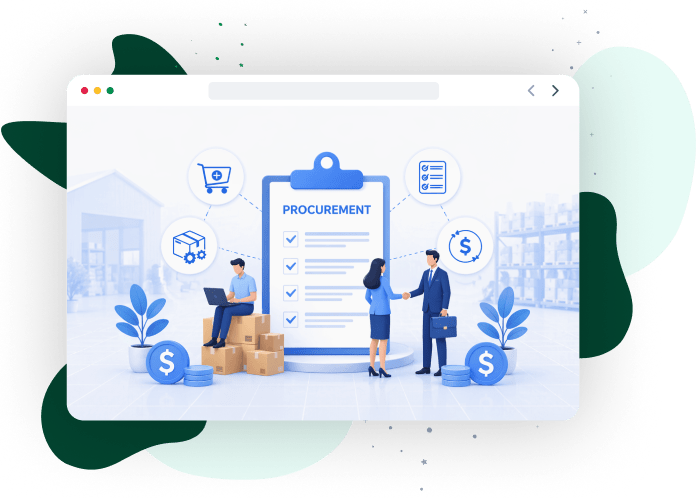
Procurement automation standardizes event triggers and approval logic across sourcing and payment stages.
The foundations of procurement process automation are:
- Standardized P2P data models
- Rule-based approval routing
- Compliance validation engines
- ERP integration
- Supplier performance tracking
Impact of procurement process optimization includes:
Procurement process optimization integrates procurement automation, workflow orchestration, and ERP integration to enforce governance, risk mitigation, and scalable operations.
Mapping The Procure-to-Pay Lifecycle: From Manual Bottlenecks to Automated Workflows
Procure-to-Pay (P2P) breakdowns happen due to disconnected systems and informal approvals. Manual coordination across various tasks like purchase requisition, approval workflows, sourcing, purchase order (PO) issuance, etc, causes processing delays.
The following table maps key stages of the procure-to-pay (P2P) lifecycle, showing common manual tasks and the automations that can replace them:
| P2P Stage | Manual Constraint | Automation Pattern | Off-the-Shelf | Custom Configuration |
|---|---|---|---|---|
| Purchase Requisition | Email requests, missing cost tags | Digital forms, budget validation, and approval routing | Fixed forms | Configurable fields, entity-based allocation |
| Approval | Sequential emails, no escalation | Rule-based routing, parallel approval, and escalation timers | Static hierarchies | Matrix routing, threshold logic |
| Strategic Sourcing | Spreadsheet comparison, informal RFQs | Supplier database, bid capture, scoring engine | RFQ templates | Configurable evaluation models |
| Purchase Order | Duplicate entry, contract mismatch | Auto-generated PO, contract linkage | Standard PO module | Contract lifecycle rules, pricing tiers |
| Goods Receipt | Paper confirmation, delayed updates | Digital receipt capture, discrepancy alerts | Receipt module | Location-based inventory controls |
| Invoice Processing | Manual review, reconciliation delay | OCR capture, three-way matching, exception routing | Basic matching | Tolerance thresholds, billing rules |
| Payment Execution | Manual reconciliation, siloed payments | Scheduled payment, ERP posting | Platform payments | Treasury integration, entity-based orchestration |
Manual workflows fragment data while procurement automation centralizes ERP, invoicing, and approvals through purchase order automation systems that enforce approval routing, three-way matching, and financial control.
Eliminating Procurement Bottlenecks With Intelligent Automation
Flawed system design, fragmented data, and rigid legacy platforms create procurement bottlenecks. Intelligent automation addresses procurement bottlenecks by redesigning system architecture that currently depends on fragmented manual workflows and disconnected systems.
The table below maps recurring constraints to structured software solution patterns.
| Bottleneck | System Design Failure | Automation Pattern | Expected Operational Effect |
|---|---|---|---|
| Maverick Spending | No enforced policy engine at purchase initiation | Rule-based spend controls embedded in requisition workflow | Increased spend under control, improved cost governance |
| Manual Approvals | Email routing without escalation or audit trail | Configurable approval workflows with escalation timers | Reduced workflow latency, stronger compliance traceability |
| Data Silos | Isolated finance, inventory, and supplier databases | Unified data layer with API-driven synchronization | Consistent reporting, improved decision visibility |
| Legacy Systems | Monolithic platforms with limited integration capability | Modular services architecture with ERP connectors | Improved scalability, controlled modernization |
| Change Resistance | Complex interfaces and unclear policy logic | Role-based dashboards, contextual guidance, and embedded policy validation | Increased adoption, reduced policy violations |
| Workflow Latency | Sequential processing without automation triggers | Event-driven workflow orchestration | Shorter cycle times, predictable processing intervals |
System-level enforcement shifts governance from retrospective audits to controlled execution. Structured workflow controls replace fragmented execution with measurable compliance checkpoints as automation integrates SLA monitoring and policy enforcement into procurement workflows.
How Custom Procurement Software Would Look For Your Business
Procurement transformation must align automation with enforceable security and compliance controls. Fragmented systems weaken governance when access permissions, audit trails, and compliance evidence remain inconsistent.
- Select layers to reveal technical specifications.
- Explore API integrations and data flow.
- Review security and access control boundaries.
Explore the layered stack that powers our custom procure-to-pay software solution.
System Overview
Custom procurement software embeds SOC 2-aligned controls, role-based access enforcement, and immutable audit logs directly into the procure-to-pay architecture.
Role-based access control across requisition, approval workflows, and contract lifecycle management
Segregation of duties is enforced within the system logic
Immutable audit logs capturing every transaction and policy override
Continuous monitoring aligned with SOC 2 security and availability criteria

Evaluate how a secure, integration-ready procurement architecture can strengthen compliance readiness while preserving operational efficiency.
Request A Secure Procurement Architecture WalkthroughDriving Measurable Results Across Industries
From automating manual calculations to modernizing legacy infrastructure, we build software that directly impacts the bottom line. Our custom solutions consistently reduce operational costs and accelerate process efficiency.
View Our Case Studies
Strategic Sourcing Powered By Data-Driven Supplier Platforms
Strategic sourcing loses effectiveness when supplier intelligence remains scattered across spreadsheets and email threads instead of structured sourcing software for supplier evaluation. Eventually, supplier segmentation becomes inconsistent, total cost of ownership (TCO) analysis requires manual aggregation, and supplier risk management becomes reactive rather than predictive.
Supplier platforms apply scoring models to consolidated spend records:
Spreadsheet-Based Sourcing Limitations
Spreadsheet environments create structural limitations:
- Static supplier records without live updates
- Manual supplier segmentation based on incomplete data
- TCO calculations are separated from logistics and quality costs
- No embedded supplier risk management indicators
- Limited cross-category visibility
Version conflicts extend bid evaluation timelines and delay award decisions. Risk signals remain buried in isolated files. Strategic sourcing operates on partial insight.
Real-Time Sourcing Dashboard Architecture
Custom platforms replace spreadsheet coordination with centralized dashboards backed by unified data models. Supplier master data integrates with ERP, finance, and logistics systems, and vendor management systems through controlled interfaces. Spend history, contract data, performance metrics, and compliance records converge into a consolidated data layer.
Real-time sourcing dashboards support:
- Supplier segmentation across spend categories
- Continuous TCO evaluation using integrated cost inputs
- Supplier risk management scoring
- Portfolio-level visibility into supplier concentration
The platform enforces sourcing rules through approval routing and scoring engines.
Maximizing Results With E-Sourcing Tools And The RFQ Process
Request for quotation (RFQ) and request for proposal (RFP) cycles lose control when bid collection occurs through email and spreadsheets. As a result, pricing comparisons require manual consolidation, supplier scoring lacks consistent logic, and digital sourcing remains fragmented across teams.
RFQ automation enforces standardized submission rules and scoring logic across sourcing events.
Core components of RFQ automation include:
- Configurable RFQ and RFP templates
- Controlled supplier invitation management
- Structured bid submission portals
- Deadline enforcement and automated reminders
- Centralized document repository
A bid comparison engine standardizes evaluation. Line-item pricing, service levels, delivery schedules, and compliance declarations normalize into comparable datasets. Weighted supplier scoring models reduce subjectivity and strengthen traceability.
Custom workflows extend beyond generic RFQ automation templates. Industry-specific sourcing logic can include:
- Regulatory qualification checkpoints
- Category-based evaluation weight adjustments
- Multi-stage technical and commercial scoring
- Region-specific compliance validation
- Project-based cost allocation logic
Supplier scoring integrates with broader digital sourcing systems. Bid outcomes update supplier performance records, so the historical comparisons can be made for future negotiations. RFQ automation becomes a governed intelligence layer within strategic sourcing rather than an isolated transaction tool.
Boosting Supplier Relationship Management Through Data Platforms
Supplier relationship management (SRM) platforms weaken when interactions rely on email threads and periodic reviews because performance discussions lack structured data, service level agreement (SLA) monitoring occurs only after service failure, and supplier collaboration becomes reactive.
Data platforms structure supplier relationship management around measurable performance and risk indicators. Modern SRM architecture centralizes supplier performance data within a unified data layer and exposes it through operational dashboards, which provide:
- Supplier scorecards segmented by category and spend
- SLA monitoring indicators with threshold alerts
- Performance analytics across quality, cost, and reliability
- Risk flags tied to financial or compliance thresholds
Automated alerts trigger when SLA deviations or risk thresholds exceed defined limits, reducing the reliance on manual tracking and periodic audits. Supplier collaboration modules configure controlled communication through integrated vendor management tools. Corrective action plans, documentation exchange, and performance reviews remain linked to supplier records.
Modern Procurement Technology Stack: Automation, AI, And Secure Integration
Modern procurement systems rely on a layered technology architecture that integrates workflow automation, analytics, enterprise systems, and security controls. Without this alignment, workflow automation platforms may operate separately from analytics systems, ERP integration remains incomplete, and contract lifecycle platforms function primarily as document repositories rather than enforcement mechanisms. Security controls may also remain detached from core transaction workflows.
A modern procurement technology stack resolves these issues by organizing procurement capabilities into coordinated layers, workflow orchestration, intelligence and analytics, enterprise integration, and security, within a unified platform architecture.
The workflow layer anchors procurement automation. It governs purchase requisition routing, approval logic, three-way matching, invoice automation, and contract lifecycle management triggers. Rule engines enforce policy thresholds and escalation paths. Robotic process automation (RPA) handles repetitive validation tasks within defined guardrails. It enforces rule-based execution across procurement transactions.
The intelligence layer introduces AI in procurement as decision support rather than surface-level automation. Machine learning models process spending patterns, supplier performance signals, and compliance data. Predictive analytics transforms historical transactions into calculated predictions. Anomaly detection mechanisms flag deviations before financial exposure escalates. It embeds predictive analytics within defined procurement decision controls.
The integration layer connects procurement systems with ERP, finance, logistics, and supplier platforms. API-driven ERP integration synchronizes financial postings, inventory management systems, and master data updates. Middleware synchronizes transactions across systems and records audit logs. Weak integration creates isolated data flows and inconsistent transaction visibility.
The security and governance layer embeds role-based access control, encryption standards, audit trail logging, and contract lifecycle management safeguards within transaction flows. These controls align with regulatory policies and supply chain compliance systems.
Layered architecture supports incremental scaling without fragmenting transaction controls. Procurement automation, AI in procurement, ERP integration, and contract lifecycle management must interoperate within a governed framework.
Unleashing Procurement Automation And Generative AI Advantages
AI initiatives underperform when treated as task automation rather than decision infrastructure. Generative AI and machine learning can automate forecasting, anomaly detection, and contract analysis tasks.
ML models analyze historical spend, supplier lead times, and seasonal demand patterns. Predictive analytics supports structured procurement planning by shifting sourcing cycles from reactive to forecast-driven.
Anomaly detection engines monitor pricing, quantity variance, invoice patterns, and approval deviations. Structured alerts surface irregularities early, enabling risk mitigation to shift from corrective response to proactive control.
Generative AI processes contract documents within contract lifecycle management systems. Key clauses convert into searchable metadata. Renewal timelines and compliance obligations become trackable fields.
Machine learning refines supplier scoring using delivery reliability, dispute frequency, and SLA adherence data. Performance analytics continuously recalibrate evaluation logic.
Generative AI strengthens procurement automation when embedded into core workflows and ERP connections. Predictive analytics and anomaly detection operate within defined approval and compliance controls.
Selecting The Right Procurement Software And Contract Management Systems
Selecting procurement software requires evaluating alignment with enterprise architecture, ERP integration, and governance requirements.
The following considerations help assess platform scalability and operational fit.
Alignment With Integration And Governance Models
Procurement platform selection fails when evaluation prioritizes feature lists over architectural fit. Integration gaps emerge after deployment, limiting workflow evolution and detaching security controls from transaction flows. Effective procurement platforms align with enterprise integration architecture, supporting structured ERP connectivity, governed data flows, and consistent audit controls.
Capabilities Of Integration-Ready Enterprise Platforms
Platforms such as SAP and Oracle constrain procurement automation with ERP connectivity. These systems enable standardized approval workflows, invoice automation, and contract lifecycle management modules. Native configuration limits advanced sourcing rules and approval matrices.
Role Of Custom Extensions And Middleware
Custom extensions and middleware enforce structural limitations. APIs synchronize master records and financial postings. Middleware enables workflow orchestration beyond core constraints. Modular services extend contract lifecycle management with clause validation and obligation tracking.
Build vs Buy vs Hybrid Decision Matrix
| Decision Model | Security | Scalability | Customization Limits |
|---|---|---|---|
| Buy (Off-the-Shelf) | Vendor-managed security controls | Scales within vendor-defined infrastructure | Restricted to configuration rules and exposed APIs |
| Build (Custom) | Internally defined security controls | Scalability is defined by cloud and infrastructure design | High flexibility with sustained engineering ownership |
| Hybrid (Platform + Extensions) | Vendor security with additional governance controls | Modular scaling through middleware and service extensions | Selective flexibility beyond core platform constraints |
Platform strategy defines integration depth and governance consistency. Integration depth, extensibility, and governance alignment govern whether contract lifecycle management systems support controlled scale or introduce structural rigidity.
Turning Procurement Data Into Profit Intelligence
Procurement systems generate large transaction volumes that reduce the spend visibility. Procurement analytics converts raw spend data into profit intelligence through standardized data models and modern supply chain analytics platforms.
Raw purchase orders, invoices, receipts, and contract records must pass through classification and normalization processes. Data cleansing standardizes taxonomy across the procure-to-pay lifecycle.
Centralized data models enable consolidated spend visibility:
Spend analysis systems surface patterns that manual reporting cannot detect. Repeated off-contract purchases, fragmented supplier volumes, and pricing inconsistencies reveal cost leakage. Reporting shifts from periodic to continuous.
Profit intelligence emerges when procurement analytics aligns financial data, supplier performance metrics, and contractual obligations within a consolidated reporting model. Executives gain structured insight into margin impact, working capital exposure, and sourcing efficiency trends.
Turning procurement data into profit intelligence requires defined governance rules, a standardized taxonomy, and integration across ERP and sourcing platforms. Weak data governance limits spend visibility to historical reporting outputs.
Mastering Spend Analysis And Controlling Maverick Spending

Spend analysis examines procurement transactions to understand how organizations allocate purchasing budgets across suppliers and categories. It fails when transaction data lacks classification discipline because supplier names vary across systems, category codes remain inconsistent, and maverick spending hides within unstructured records.
Mastering spend analysis requires structured classification, data normalization, and behavioral controls embedded within procurement workflows.
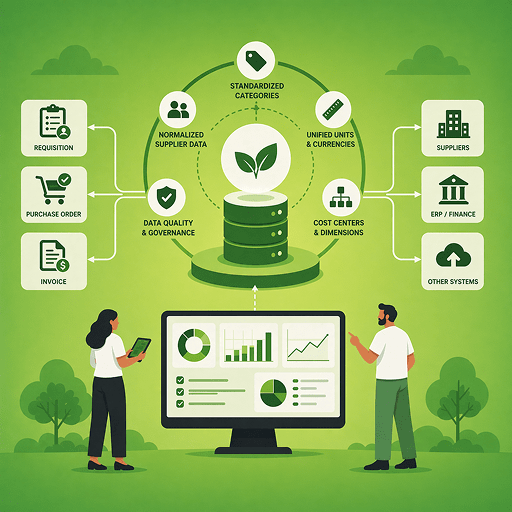
Effective classification begins with a standardized category taxonomy applied across the procure-to-pay lifecycle. Every purchase requisition, purchase order, and invoice must map to controlled spend categories.
Data normalization aligns supplier naming conventions, currency formats, unit measures, and cost centers into unified records. Without normalization, procurement analytics cannot produce accurate aggregation, causing supplier and category spend to appear distorted and masking potential leakage.
Behavioral controls reduce maverick spending through:
- Mandatory purchase requisition routing before supplier engagement
- Catalog-based ordering aligned with approved vendors
- Budget enforcement at the approval stage
- Automated policy validation for off-contract purchases
Spend under control remains a primary governance benchmark. Recent industry research by CPO Rising indicates procurement teams manage approximately 71% of total enterprise spend, leaving nearly 29% unmanaged and exposed to leakage risk. Increasing the percentage of spend under control directly expands savings opportunities and compliance visibility.
Budget enforcement must integrate with approval workflows and ERP integration layers. Threshold-based routing and real-time budget validation prevent unauthorized commitments before financial exposure occurs.

Harnessing Procurement Analytics For Better Decision-Making
Procurement reporting often stops at descriptive dashboards. Historical spend summaries and supplier performance charts explain what occurred, but they do not guide forward decisions. Procurement analytics supports decision-making through predictive and prescriptive analytics.
Descriptive procurement analytics aggregates spend across categories and suppliers. Dashboards highlight contract utilization, price variance, and delivery performance trends. This stage establishes baseline reporting but does not influence future outcomes.
Predictive Analytics
Predictive models analyze historical spend patterns, supplier reliability metrics, and seasonal demand signals. Forecasting algorithms estimate future purchasing needs and potential cost fluctuations. Risk scoring models anticipate supplier disruption or price volatility. Forecast outputs help in procurement planning and budget allocation.
Prescriptive Analytics
Prescriptive systems recommend optimal sourcing actions based on defined constraints. Scenario modeling evaluates supplier combinations, contract terms, and volume allocations. Budget thresholds, risk tolerance levels, and performance targets guide automated recommendations. Prescriptive models generate constrained sourcing recommendations within defined policy thresholds.
Advancing from descriptive to predictive and prescriptive procurement analytics transforms data into controlled strategy execution.
Organizational Models And Effective Procurement Process Design
Procurement operating models shape how sourcing decisions, supplier management, and budget governance are executed across the enterprise. Organizations typically adopt centralized, decentralized, or hybrid procurement structures depending on control requirements, operational complexity, and regional autonomy.

Centralized Procurement Model
A centralized procurement model consolidates purchasing authority within a single organizational function that manages supplier selection, contracts, and spending policies across the enterprise. It depends on approval routing, supplier segmentation, and spend reporting. Software architecture must enforce enterprise-level policy routing, centralized data models, and cross-entity reporting discipline.

Decentralized Procurement Model
A decentralized procurement model distributes purchasing authority across business units or regional teams, allowing local entities to manage suppliers and sourcing decisions independently. Systems must allow configurable approval workflows, localized supplier catalogs, and entity-level budget controls. Audit logs must remain consistent despite distributed execution.
Hybrid Procurement Model
A hybrid procurement model combines centralized governance for strategy and supplier risk with decentralized execution for operational purchasing activities. Strategic supplier risk management and category governance remain centralized. Transactional execution occurs locally. Platform design must support role-based permissions, segmented dashboards, and performance metrics.
Centralized, Decentralized, And Hybrid Procurement Models Compared
Procurement performance varies based on how governance control and local flexibility are balanced. Structural choices influence approval workflows, supplier segmentation logic, spend visibility, and compliance enforcement. Software architecture must reinforce the selected model rather than compensate for structural tension.
| Model | Governance Control | Local Flexibility | System Design Implication |
|---|---|---|---|
| Centralized Procurement | High control over supplier selection, contract standards, and approval workflows | Limited autonomy at the regional or business-unit level | Unified data model, strict workflow orchestration, enterprise dashboards |
| Decentralized Procurement | Limited central oversight beyond the policy framework | High autonomy in supplier choice and purchasing decisions | Configurable workflows, segmented budgets, and distributed data access |
| Hybrid Procurement | Central control over strategic sourcing and risk management | Local authority for operational purchasing within defined thresholds | Layered permissions, centralized analytics, localized execution interfaces |
When And How To Outsource Procurement For Maximum Efficiency
API-driven integrations can improve outsourcing efficiency by synchronizing workflows, audit trails, and supplier data across internal ERP systems and external provider platforms.
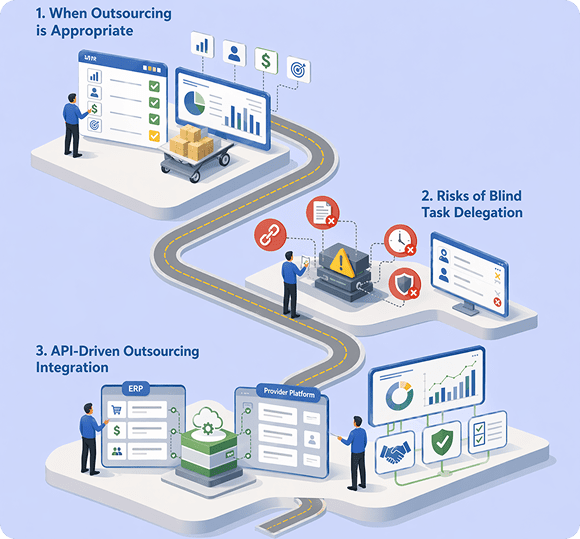
- Transaction volumes exceed internal processing capacity
- Category expertise requires specialized market intelligence
- Cost structures demand external sourcing leverage
- Internal teams focus on strategic procurement analytics
- Disconnected approval workflows
- Limited audit trail continuity
- Delayed spend analysis updates
- Reduced supplier risk management transparency
- Real-time data exchange between internal ERP integration layers and external provider systems
- Shared dashboards for spend visibility and supplier performance analytics
- Embedded SLA monitoring within contract lifecycle management systems
- Unified audit trail logging across internal and external workflows
Procurement automation must extend across organizational boundaries. Workflow orchestration, supplier collaboration, and performance analytics should remain visible within core systems even when execution shifts externally.
Performance Measurement In Procurement And Continuous Improvement
Performance measurement in procurement defines how procurement KPIs and audit trails translate operational activity into structured accountability and continuous improvement. The following six components explain how modern procurement systems measure performance and enforce operational accountability.
Measurement Gaps In Traditional Procurement
Procurement performance declines when procurement KPIs exist only in reports. Audit preparation requires manual reconstruction of events. Continuous improvement lacks structured feedback loops.
Software-Enforced Accountability
Procurement software embeds accountability within transaction flows. Approval workflows, contract updates, invoice automation, and payment events generate audit trails. System logs preserve role-based access records and change history.
Embedded Procurement KPIs
Modern platforms calculate procurement KPIs in near real time, including:
- Cycle time across procure-to-pay stages
- Spend under management
- Contract compliance rate
- Supplier performance metrics
KPI Integration With Workflow
KPIs connect directly to workflow orchestration rather than external spreadsheets.
Audit Trails and Compliance Readiness
Audit trails capture approvals, modifications, and exceptions. Compliance readiness strengthens when documentation remains searchable and time-stamped. Governance control becomes system-enforced rather than manually validated.
Continuous Improvement Through Data Feedback
Continuous improvement requires defined baselines and periodic KPI recalibration cycles. Structured reporting highlights bottlenecks, policy deviations, and cost leakage patterns. Procurement analytics transform performance measurement into a controlled process refinement.
Key Procurement KPIs, Audit Trails, And Transparency Initiatives
Effective KPI frameworks typically include:
- Cycle time from requisition to payment
- Percentage of spend under management
- Contract compliance rate
- Three-way matching accuracy
- Supplier performance adherence to SLA thresholds
These procurement KPIs must integrate directly with workflow orchestration and ERP integration layers. Static reporting fails to support governance control.
Audit trails reinforce compliance readiness by capturing:
- Approval timestamps and role-based actions
- Contract revisions and version history
- Invoice exception handling
- Policy override justifications
Immutable logging strengthens regulatory preparedness and internal audit efficiency. Documentation remains searchable and time-stamped rather than reconstructed post-event.
Transparency initiatives depend on structured executive reporting dashboards. Spend reporting across categories and supplier concentration metrics, and compliance deviation trends must remain accessible at the leadership level. Performance analytics supports informed governance decisions rather than retrospective review.
When procurement KPIs, audit trails, and executive reporting align within a unified system architecture, compliance readiness becomes continuous rather than periodic. Transparency depends on system-backed reporting and traceable transaction logs.
Best Practices For Change Management In Procurement
Change management plays a critical role in successful procurement transformation. New procurement automation layers often introduce operational friction like complex user experience (UX), training programs fail to reflect real workflows, and policy communication replaces practical system guidance. Effective change management addresses these challenges through user-centered design, targeted training, and phased implementation.
Workflow orchestration must align with how procurement teams operate. Approval workflows, purchase requisition forms, and supplier dashboards should minimize manual rework. Clear interfaces reduce resistance and policy breaches.
Training must reflect functional responsibility. Approvers, sourcing managers, finance teams, and administrators require differentiated guidance. Embedded help modules and contextual prompts reinforce procurement automation within daily tasks.
Phased deployment reduces operational disruption. Initial rollout can target limited categories or business units. Performance analytics should measure adoption rates, approval cycle time changes, and error frequency before wider expansion.
Continuous improvement depends on user feedback. System logs and procurement KPIs reveal friction points. Configuration adjustments should follow measurable evidence rather than assumptions.
Advanced Optimization Strategies And Future Procurement Trends
Traditional procurement systems bundle sourcing, approval workflows, contract lifecycle management, and reporting into tightly coupled environments. Integration complexity increases with each enhancement. Scaling across entities or geographies introduces configuration conflicts.
Future-proofing procurement depends on a modular software architecture that isolates change without destabilizing core operations. Modular procurement architecture separates capability layers:
- Workflow orchestration as an independent service
- Supplier intelligence and analytics as extensible modules
- Integration middleware decoupled from core ERP systems
- Compliance and audit controls are embedded but independently configurable
Modern procurement systems evolve through gradual upgrades rather than complete system replacements at once. New optimization models, analytics engines, or compliance frameworks integrate through APIs without disrupting transaction flows.
Future procurement trends emphasize cross-functional alignment. Legal requirements, logistics constraints, and financial controls increasingly intersect within sourcing and contract execution. Modular systems allow controlled expansion into adjacent domains without architectural fragmentation.
Advanced optimization requires structural flexibility. Modular software enables procurement automation to adapt to regulatory change, supplier volatility, and operational growth while preserving governance control and audit integrity.
Integrating Legal, Logistics, And Digital Procurement Strategies
Contract compliance gaps often surface after execution when legal review remains disconnected from procurement workflows. Logistics constraints may appear after the purchase order release when delivery feasibility is not validated during sourcing decisions. Cross-functional processes frequently rely on manual coordination when legal, logistics, and procurement systems operate separately.
These structural gaps create procurement inefficiencies. Digital procurement platforms address this challenge by embedding contract compliance and logistics validation directly within procurement workflows.

Contract Compliance Integration
- Clause validation embedded within approval workflows
- Obligation tracking linked to contract lifecycle management
- Automated alerts for renewal deadlines and deviations
- Policy enforcement before purchase order issuance

Logistics Integration Within Procurement Workflows
- Lead time validation during sourcing decisions
- Freight cost inputs are integrated into the total cost evaluation
- Inventory capacity checks through ERP integration
- Delivery feasibility confirmation before supplier award

Cross-Functional Workflow Orchestration
- Legal review routing within sourcing workflows
- Logistics confirmation checkpoints before PO release
- Finance validation integrated into approval logic
- Shared dashboards with role-based access controls
Platform design synchronizes legal review, logistics validation, and sourcing decisions. Cross-functional workflows replace manual handoffs with structured system-driven coordination.
Procurement Process Optimization And Cost Savings Best Practices
Procurement cost savings depend on more than negotiated supplier discounts. Price variance across purchasing channels, contract leakage during execution, and fragmented supplier volumes reduce the impact of isolated negotiations. These gaps limit visibility into actual spending and prevent consistent savings realization. Procurement process optimization addresses these issues by enforcing structured workflows and integrating analytics into sourcing and purchasing decisions.
-
Hard Savings Through Controlled Execution
- Consolidated supplier volumes to increase negotiation leverage
- Enforcement of contract pricing through automated validation
- Three-way matching to eliminate overpayment risk
- Reduction of duplicate suppliers through spend analysis
-
Cost Avoidance Through Predictive Controls
- Budget enforcement at the purchase requisition stage
- Early anomaly detection for price or quantity deviations
- Supplier risk scoring to prevent disruption costs
- Demand forecasting to reduce emergency procurement premiums
-
System-Enforced Savings Discipline
- Embedded approval workflows aligned with budget thresholds
- Spend visibility dashboards highlighting leakage patterns
- Performance analytics linking supplier reliability to cost impact
Achieving Sustainable And Ethical Procurement Integration
Traditional procurement platforms treat ESG requirements as external audits or annual assessments. This approach limits visibility and weakens accountability. Supplier declarations remain static and violations surface after reputational or regulatory exposure.
Sustainable procurement integration requires ESG criteria embedded as data structures and enforcement mechanisms within system architecture.
Digital procurement systems must convert sustainability standards into measurable fields within supplier master data and sourcing workflows. ESG attributes, compliance certifications, and risk indicators should integrate with approval workflows and supplier segmentation logic. Policy thresholds must trigger automated validation during supplier onboarding and contract award.
Ethical procurement integration depends on:
- Structured ESG scoring frameworks
- Continuous supplier compliance monitoring
- Embedded validation rules within procure-to-pay transactions
- Audit trails capturing sustainability-related decisions
Sustainability must align with governance and cost discipline. Procurement automation should track environmental impact indicators alongside financial metrics. Integration across ERP, logistics, and supplier platforms ensures that ESG enforcement operates consistently across categories and regions.
Sustainable procurement integration depends on measurable accountability. ESG enforcement occurs when sustainability criteria are embedded as structured data within procurement workflows rather than treated as narrative policy statements.
Book A Consultation For Digital Transformation of the Procurement Process
Procurement transformation requires architectural clarity, integration discipline, and governance alignment. Fragmented automation initiatives rarely deliver sustained operational efficiency or cost control.
A structured consultation can assess workflow orchestration, ERP integration depth, compliance posture, and optimization readiness across the procure-to-pay lifecycle.
Evaluate system architecture, identify bottlenecks, and define a scalable roadmap for procurement automation and digital transformation.