
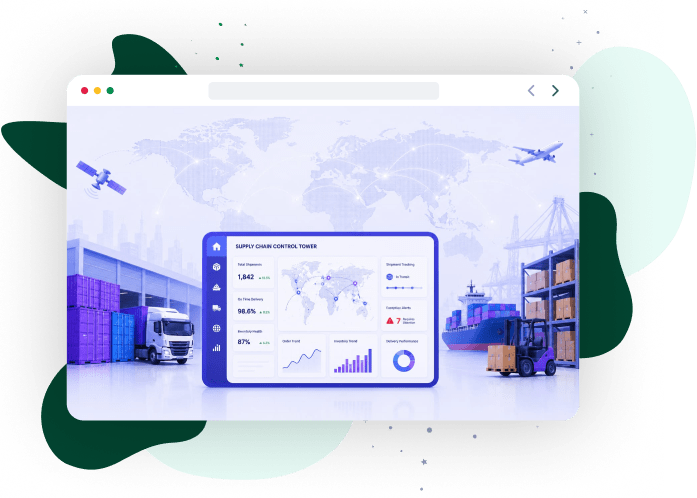
As organizations face increasing disruption, demand volatility, and supply chain complexity, digital transformation helps improve operational agility, supply chain resilience, and execution efficiency across enterprise operations.
This guide explores digital transformation frameworks, integration strategies, emerging technologies, digital maturity assessment, and ROI measurement across enterprise supply chain operations.
What Is Digital Supply Chain Transformation?
Digital supply chain transformation is the process of replacing manual and disconnected supply chain processes with integrated digital systems that automate procurement, inventory management, warehousing, transportation, fulfillment, and supplier coordination across enterprise operations.
Organizations use AI, IoT, RPA, blockchain, predictive analytics, and API-based integration to automate transaction processing, track shipment activity, optimize inventory flow, and synchronize supply chain execution across supply chain operations.
Enterprises implement supply chain software platforms to standardize workflows, enforce operational governance, and scale digital supply chain initiatives across distributed operations.
What Are the Core Concepts of Supply Chain 4.0 and Digital Transformation in Logistics?
Supply Chain 4.0 is a data-driven operating model that uses IoT infrastructure, automation, cloud platforms, AI-driven orchestration, and continuous system communication to coordinate logistics, manufacturing, procurement, warehousing, and distribution operations in real time.
The model replaces isolated supply chain processes with integrated operational networks where transactional events automatically trigger responses across ERP platforms, carrier systems, supplier portals, and fulfillment operations.
This operational structure improves inventory flow, shipment coordination, replenishment timing, and operational visibility across enterprise operations.
Core Operational Components of Supply Chain 4.0
The following technologies form the operational foundation of Supply Chain 4.0 environments:
- IoT devices that capture equipment, shipment, and inventory telemetry data
- Event-processing systems that identify operational exceptions and workflow disruptions
- AI-driven orchestration models that calculate routing, replenishment, and capacity requirements
- Cloud integration layers that synchronize ERP, WMS, MES, procurement, and transportation management systems
- Digital control towers that centralize shipment monitoring, inventory tracking, and operational alert management
- Automated workflow systems that trigger procurement updates, inventory transfers, and shipment notifications based on predefined business rules
Integrated logistics operations use these technologies to coordinate freight movement, dock scheduling, shipment consolidation, customs processing, and transportation planning across regional and global distribution networks.
Operational Shifts Introduced by Supply Chain 4.0
Supply Chain 4.0 changes how manufacturing, transportation, warehousing, and supplier networks process operational data, automate workflows, and coordinate daily supply chain activities.
Manufacturing Execution and Production Coordination
Production facilities connect MES platforms, machine telemetry systems, and planning platforms to synchronize material movement, production scheduling, and equipment utilization across manufacturing operations.
Transportation Coordination
Transportation platforms process telematics data, delivery milestones, route deviations, and fuel metrics to coordinate carrier activity and monitor shipment movement in real time.
Distribution Infrastructure
Distribution centers use robotics, conveyor systems, slotting algorithms, and warehouse automation platforms to accelerate inventory handling, order picking, and outbound staging operations.
Supplier Network Management
Procurement systems exchange supplier schedules, purchase orders, ASN records, and inventory commitments through synchronized sourcing platforms that improve supplier coordination and procurement tracking consistency.
Enterprise Impact Across Supply Chain Networks
Organizations implementing Supply Chain 4.0 frameworks improve operational performance across:
- Inventory allocation accuracy
- Transportation planning
- Supplier coordination
- Warehouse cycle performance
- Shipment tracking
- Operational responsiveness
These Supply Chain 4.0 frameworks reduce processing delays, improve workflow standardization, and maintain continuous coordination across enterprise supply chain operations.
What Are the Key Frameworks and Pillars for Successful Digital Supply Chain Transformation?
Digital supply chain transformation uses structured operating models to coordinate system integration, automation, analytics, and partner collaboration across enterprise supply chain operations.
These operating models help organizations assess infrastructure readiness, prioritize deployment phases, standardize workflows, and reduce implementation gaps during supply chain modernization initiatives.
Without a structured transformation framework, organizations face disconnected applications, duplicated workflows, inconsistent data exchange, and limited operational visibility across procurement, warehousing, transportation, and fulfillment processes.
Most enterprise supply chain transformation programs structure modernization initiatives across four operational pillars.
Integration Architecture
Integration architecture connects ERP, WMS, TMS, procurement, supplier, and fulfillment systems through APIs, middleware platforms, and cloud-based integration layers.
Core integration priorities include:
- Master data governance
- Cross-platform interoperability
- Event-based transaction synchronization
- Centralized operational data exchange
Workflow Automation
Workflow automation replaces manual coordination with automated workflows, RPA frameworks, and rule-based processing logic.
Organizations using integrated supply automation platforms automate procurement routing, replenishment triggers, inventory updates, and order processing across supply chain operations.
Operational Intelligence
Operational intelligence platforms process transactional activity, IoT telemetry data, shipment events, and inventory movement data to support forecasting, disruption monitoring, inventory allocation, and network analysis.
Core technologies include:
- Predictive analytics platforms
- AI-based planning engines
- Digital control towers
- Decision-support systems
Gartner predicts that by 2028, generative AI will support 25% of logistics KPI reporting workflows. The shift reflects growing adoption of AI-driven reporting, automated performance analysis, and predictive monitoring across enterprise supply chain operations.
Ecosystem Coordination
Ecosystem coordination standardizes communication, transaction visibility, supplier collaboration, and operational governance across suppliers, carriers, warehouses, manufacturing facilities, and distribution networks.
Driving Measurable Results Across Industries
From automating manual calculations to modernizing legacy infrastructure, we build software that directly impacts the bottom line. Our custom solutions consistently reduce operational costs and accelerate process efficiency.
View Our Case Studies
Why Structured Transformation Models Matter
Structured transformation models help organizations:
- Assess operational readiness
- Sequence deployment phases
- Standardize workflows
- Maintain transaction continuity
- Scale modernization programs
These models provide a structured approach for planning digital transformation initiatives, evaluating operational dependencies, and coordinating enterprise-wide deployment strategies.
What Are the Four Pillars of Digital Supply Chain Transformation?
Digital supply chain transformation operates through 4 foundational pillars that standardize data exchange, automate workflows, improve operational intelligence, and coordinate supplier and logistics networks across enterprise supply chain operations. Together, these pillars support scalable supply chain modernization, faster operational decision-making, and consistent execution control across enterprise operations.
Digital Data Flows
Digital data flows synchronize procurement records, inventory updates, shipment milestones, supplier transactions, and fulfillment activity across ERP, WMS, transportation management, and sourcing systems.
Core operational functions include:
- Data normalization
- Transaction tracking
- Real-time operational visibility
- Cross-system synchronization
These data management frameworks reduce reporting delays, maintain transaction accuracy, and improve inventory and shipment coordination across supply chain operations.
Process Automation
Process automation platforms execute replenishment triggers, approval routing, shipment notifications, and exception management through rule-based workflow automation.
Organizations using integrated supply visibility platforms automate inventory monitoring, shipment tracking, replenishment coordination, and order processing across logistics and fulfillment operations.
These automation systems reduce manual intervention, accelerate workflow processing, and maintain operational consistency during high transaction volumes.
Intelligent Insights
Intelligent analytics platforms analyze inventory movement, carrier activity, fulfillment signals, and operational performance data to support:
- Demand forecasting
- Capacity planning
- Exception monitoring
- Network optimization
These analytics systems identify supply disruptions, forecast inventory requirements, and improve planning accuracy across transportation, warehousing, and procurement operations.
Ecosystem Integration
Ecosystem integration connects manufacturers, suppliers, distributors, carriers, and third-party logistics providers through standardized communication protocols and interoperable transaction systems.
Integrated supply chain ecosystems improve supplier collaboration, shipment coordination, operational visibility, and transaction consistency across procurement, warehousing, transportation, and fulfillment networks.
Together, these four pillars provide the operational and technical foundation required to scale digital supply chain transformation across enterprise operations.
What Are the Steps in a Digital Transformation Roadmap for Supply Chain Operations?
The steps in a digital transformation roadmap for supply chain operations typically include infrastructure assessment, target-state planning, platform integration, pilot deployment, enterprise rollout, workforce enablement, and continuous optimization.
Integrated supply planning systems coordinate inventory positioning, procurement timing, replenishment cycles, and forecasting activities during digital transformation initiatives.
The following roadmap stages guide assessment, deployment, scaling, workforce adoption, and long-term optimization across enterprise supply chain operations.

Infrastructure and Process Assessment
Assessment stages identify workflow bottlenecks, system limitations, data inconsistencies, and integration gaps before digital modernization begins.
Core assessment activities include:
- Legacy platform analysis
- Workflow dependency mapping
- Data architecture review

Target-State Planning
Target-state planning defines future operating models, deployment priorities, governance standards, and digital transformation objectives across supply chain operations.
Core planning activities include:
- Transformation scope definition
- KPI alignment
- Deployment prioritization

Platform Selection and Integration
Platform selection evaluates interoperability, deployment flexibility, scalability, and integration compatibility across enterprise supply chain systems.
Core evaluation activities include:
- API compatibility validation
- Scalability analysis
- Enterprise platform alignment

Pilot Deployment
Pilot deployments validate workflow processing, transaction accuracy, integration stability, and exception handling before enterprise-wide rollout.
Core pilot activities include:
- Workflow validation
- Exception testing
- Integration verification

Enterprise Rollout
Enterprise rollout phases expand system deployment across procurement, warehousing, transportation, fulfillment, and distribution operations.
Core rollout activities include:
- Multi-site deployment
- Workflow standardization
- Governance enforcement

Workforce Enablement
Workforce enablement prepares supply chain teams for new systems, workflows, operational procedures, and governance standards.
Core enablement activities include:
- User training programs
- Role-based access configuration
- Change management coordination

Continuous Optimization
Continuous optimization tracks system performance, platform utilization, workflow efficiency, and KPI trends after deployment.
Core optimization activities include:
- KPI monitoring
- Exception management
- Performance refinement
These roadmap stages help organizations scale digital transformation initiatives, manage deployment complexity, and maintain operational continuity across supply chain operations.
How Do Organizations Assess Digital Maturity in Supply Chain Operations?
Organizations assess digital maturity in supply chain operations by evaluating technology readiness, workflow standardization, integration capability, data governance, and operational visibility across enterprise systems.
Integrated with operational analytics platforms, maturity diagnostics measure system interoperability, automation adoption, reporting accuracy, and deployment readiness across procurement, warehousing, transportation, and fulfillment operations.
Common digital maturity evaluation areas include:
- ERP, WMS, and TMS interoperability analysis
- Workflow standardization and governance maturity
- API, middleware, and cloud infrastructure readiness
- Reporting accuracy and real-time visibility coverage
- RPA, AI, and predictive analytics adoption
- Data governance and master data consistency
- Change management and workforce preparedness
- Infrastructure scalability and deployment sequencing
These digital maturity models help organizations sequence modernization initiatives, reduce migration risk, prioritize technology investments, and align transformation roadmaps with operational requirements and long-term business goals.
What Technologies Are Driving Supply Chain Transformation?
The technologies driving supply chain transformation include AI, GenAI, IoT, blockchain, digital twins, and automation systems that improve forecasting, shipment tracking, warehouse coordination, manufacturing planning, and transaction management across enterprise supply chains.
These technologies process real-time inventory signals, analyze shipment data, automate procurement workflows, and improve supply chain decision accuracy across enterprise operations.
Integrated workflow automation systems synchronize logistics, warehousing, procurement, transportation, and fulfillment operations through rule-based processing and continuous system communication.
Core Supply Chain Transformation Technologies
The following technologies support forecasting, traceability, workflow automation, asset tracking, and capacity planning across modern supply chain operations.
AI Demand Models
Calculate demand variability, replenishment trends, and inventory allocation requirements for supply planning.
GenAI Scenario Processing
Build disruption simulations and workflow response models for sourcing, transportation, and inventory planning.
IoT Sensor Networks
Track shipment location, equipment status, temperature conditions, and inventory movement across logistics and warehouse facilities.
Blockchain Transaction Validation
Maintain immutable supplier records, shipment history, and chain-of-custody verification across sourcing and transportation workflows.
Digital Twin Simulation
Model warehouse throughput, transportation flow, and manufacturing capacity for infrastructure and resource planning.
RPA Workflow Automation
Execute procurement transactions, inventory updates, fulfillment routing, and order processing without manual coordination.
Computer Vision Systems
Verify barcode scans, pallet movement, and warehouse handling activity through camera-based inventory analysis.
Predictive Maintenance Models
Detect equipment degradation patterns and maintenance risks before machinery failure interrupts production or transportation activity.
Control Tower Platforms
Coordinate shipment visibility, supplier activity, inventory alerts, and logistics event tracking from centralized monitoring interfaces.
Together, these technologies accelerate transaction processing, improve inventory accuracy, maintain shipment traceability, and support faster operational planning across logistics, warehousing, manufacturing, and fulfillment operations.
How Do AI and Machine Learning Improve Enterprise Supply Chain Operations?
AI and machine learning improve enterprise supply chain operations by processing inventory activity, shipment movement, supplier performance, and demand variability to automate decision-making, improve forecasting accuracy, and reduce operational disruptions.
Enterprises use AI and machine learning models to manage inventory allocation, detect operational exceptions, optimize transportation activity, and respond faster to sourcing and fulfillment changes.
Integrated demand planning systems use AI-driven forecasting and automation models to coordinate replenishment, inventory positioning, and order response across supply chain operations.
Demand Forecasting
Machine learning models analyze historical demand, seasonality patterns, and order fluctuations to generate more accurate inventory and replenishment forecasts.
Core forecasting functions include:
- Demand sensing
- Forecast refinement
- Order trend analysis
- Replenishment timing
Inventory Optimization
AI engines calculate reorder thresholds, inventory allocation requirements, and stock balancing rules across warehouses and distribution centers.
Core inventory optimization functions include:
- Safety stock balancing
- Inventory segmentation
- Allocation management
- Stock rotation control
Predictive Analytics
Predictive analytics platforms identify transportation delays, supplier disruptions, fulfillment bottlenecks, and lead-time variability before service interruptions occur.
Core predictive analysis functions include:
- Shortage prediction
- Disruption monitoring
- Lead-time analysis
- Exception identification
Gartner reports that 50% of supply chain organizations plan to implement generative AI within the next 12 months, while 14% already operate active GenAI deployments. The adoption increase reflects growing enterprise demand for automated forecasting, disruption analysis, and AI-assisted supply chain decision support.
Scenario Modeling
GenAI systems simulate sourcing disruptions, inventory shortages, transportation delays, and supplier constraints to evaluate response strategies before operational disruption occurs.
Core scenario modeling functions include:
- Contingency evaluation
- Sourcing analysis
- Capacity simulation
- Risk-response modeling
Warehouse and Transportation Intelligence
AI systems evaluate labor utilization, routing activity, shipment flow, and dock capacity across warehouse and transportation operations.
Core intelligence functions include:
- Labor forecasting
- Route sequencing
- Dock scheduling
- Fleet coordination
Together, these AI and machine learning technologies automate forecasting, reduce inventory imbalance, identify supply risks earlier, and improve supply chain responsiveness across enterprise supply chain operations.
How Do IoT, Blockchain, and Digital Twins Improve Supply Chain Visibility and Traceability?
IoT sensors, blockchain systems, and digital twin models improve supply chain visibility and traceability by providing real-time shipment tracking, asset monitoring, equipment diagnostics, and transaction verification across enterprise supply chains.
Organizations use these technologies to authenticate supplier records, monitor inventory conditions, predict equipment failure, and improve supply chain decision-making across logistics, warehousing, transportation, and manufacturing environments.
Integrated blockchain systems maintain tamper-resistant transaction records and synchronize supplier, shipment, and inventory data across distributed supply chain operations.
| Technology | Primary Function | Supply Chain Use Case |
|---|---|---|
| IoT Sensors | Track temperature, location, humidity, and equipment telemetry | Cold chain monitoring, fleet tracking, and inventory visibility |
| RFID and GPS Devices | Trace shipment movement and handling activity | Transit tracking and shipment verification |
| Blockchain Ledgers | Store immutable supplier and transaction records | Product authenticity validation and chain-of-custody tracking |
| Smart Contracts | Trigger rule-based transaction processing | Procurement verification and compliance automation |
| Digital Twins | Model warehouse, transportation, and production environments | Capacity planning and infrastructure simulation |
| Predictive Maintenance Models | Identify equipment wear and failure risk | Fleet maintenance and machinery reliability analysis |
| Condition Monitoring Systems | Measure vibration, humidity, and temperature conditions | Sensitive inventory protection and cold storage management |
| Control Tower Platforms | Centralize shipment alerts and supply chain event tracking | Multi-site visibility and disruption response coordination |
Together, these technologies improve shipment traceability, validate supplier and product records, reduce inventory risk, and support faster operational response decisions across enterprise supply chain operations.
How Do Smart Warehousing, RPA, and Process Automation Improve Supply Chain Execution?
Smart warehousing, RPA, and process automation improve supply chain execution by accelerating inventory movement, reducing manual processing, and increasing fulfillment throughput across distribution and fulfillment facilities.
Organizations use these technologies to automate inventory transactions, accelerate order routing, balance labor activity, and maintain high-volume warehouse processing with fewer operational errors.
Integrated warehouse management systems connect warehouse automation tools with ERP systems, transportation management systems, barcode scanners, robotics infrastructure, and fulfillment workflows through synchronized transaction processing.
Core warehouse automation functions include:
Scan-based inventory transaction processing
Automated pick, pack, and sort workflows
Conveyor and robotic material movement
Rule-based replenishment routing
Dock scheduling and outbound staging
Labor allocation and workload balancing
ERP and legacy WMS synchronization
Exception-based workflow routing
Automated inventory reconciliation
Order dispatch and fulfillment orchestration
These automation systems reduce fulfillment delays, maintain inventory accuracy, and support scalable transaction processing across high-volume supply chain operations.
At enterprise scale, warehouse management systems must process large transaction volumes without disrupting order flow or shipment timing. An IBM case study highlights a retail order management system that processed more than 8 million records per day while routing orders across distributed fulfillment nodes in real time.
The deployment demonstrates how automation platforms support large-scale inventory coordination and continuous order processing across enterprise fulfillment networks.
What Are the Strategic Benefits of Supply Chain Digital Transformation?
The strategic benefits of supply chain digital transformation include lower operating costs, faster fulfillment execution, improved disruption response, and greater visibility across procurement, transportation, warehousing, and distribution operations.
Enterprises use digital supply chain systems to improve inventory accuracy, strengthen supplier collaboration, reduce manual processing, and scale logistics performance during demand fluctuations and supply disruptions.
Integrated SCM platforms centralize supply chain data, automate transaction workflows, and support faster planning across procurement, warehousing, transportation, and fulfillment operations.
These capabilities help organizations scale supply chain performance, reduce disruption risk, and maintain competitive advantage across high-volume enterprise operations.
How Does Supply Chain Digital Transformation Reduce Costs and Improve Agility?
Supply chain digital transformation reduces costs and improves operational agility by lowering transportation expenses, reducing inventory waste, minimizing fulfillment delays, and automating manual processing across procurement, warehousing, transportation, and distribution operations.
Organizations use automation, AI-driven planning, and real-time supply chain visibility systems to respond faster to demand shifts, sourcing disruptions, and changing market conditions.
Integrated load optimization systems improve trailer utilization, shipment consolidation, routing efficiency, and freight capacity planning across transportation operations.
1. Freight and Capacity Optimization
Transportation optimization systems analyze shipment volume, route density, trailer capacity, and carrier availability to reduce freight costs and improve load efficiency.
Key optimization outcomes include:
- Fewer empty miles
- Better shipment consolidation
- Higher carrier utilization
- Lower freight spend
2. Inventory Cost Reduction
Inventory planning systems reduce excess stock, warehouse dependency, and replenishment delays across distribution operations.
Key inventory outcomes include:
- Lower carrying costs
- Faster inventory turnover
- Reduced stock imbalance
- Better replenishment accuracy
3. Demand and Supply Responsiveness
AI-driven planning systems evaluate sourcing variability, order fluctuations, and inventory availability to support faster operational response decisions during disruptions and demand spikes.
Key responsiveness outcomes include:
- Faster sourcing adjustments
- Demand rebalancing
- Inventory repositioning
- Allocation flexibility
4. Workflow and Processing Efficiency
Automation systems reduce transaction delays, manual intervention, and process bottlenecks across fulfillment and procurement operations.
Key processing outcomes include:
- Shorter processing cycles
- Faster workflow routing
- Better labor utilization
- Higher fulfillment throughput
Advanced supply chain systems help enterprises increase fulfillment capacity, reduce operating expenses, and maintain service continuity during supply disruptions, seasonal demand changes, and rapid market shifts.
How Do Digital Supply Chain Systems Improve Visibility, Transparency, and Sustainability?
Digital supply chain systems improve visibility, transparency, and sustainability by providing real-time tracking for material sourcing, supplier activity, shipment movement, inventory status, and environmental conditions across procurement, transportation, warehousing, and distribution operations.
Organizations use these systems to improve supply chain transparency, validate supplier compliance, support sustainability reporting, and maintain traceable product movement from raw material sourcing to final delivery.
Integrated real-time visibility platforms centralize supplier records, shipment data, inventory activity, and compliance documentation across enterprise supply chain ecosystems.
Core visibility, compliance, and sustainability functions include:
Multi-tier supplier verification and sourcing transparency
Shipment milestone tracking and chain-of-custody validation
ESG reporting and compliance documentation management
Carbon emission tracking and fuel usage analysis
Temperature and environmental condition tracking for sensitive inventory
Supplier audits and ethical sourcing validation
Regulatory record management and trade compliance support
Product provenance and material origin verification
Centralized logistics alerts and disruption tracking
Sustainability performance analysis and benchmarking
These systems help organizations improve regulatory compliance, strengthen supplier accountability, support ethical sourcing programs, and reduce environmental impact across global supply chain operations.
How Do Organizations Measure ROI and Business Impact in Digital Supply Chain Projects?
Organizations measure ROI and business impact in digital supply chain projects by tracking cost reduction, fulfillment speed, inventory efficiency, disruption recovery, and customer service performance across supply chain transformation efforts.
Enterprise supply chain teams evaluate these outcomes during assessment, deployment, scaling, and optimization phases to measure business impact and long-term modernization value.
1. Operational Performance Measurement
Operational performance metrics track fulfillment speed, order cycle time, inventory accuracy, transportation efficiency, and workflow productivity across procurement, warehousing, logistics, and distribution activities.
Key operational KPIs include:
Order processing speed
Fulfillment accuracy
Inventory turnover
Transportation cycle time
Workflow throughput
2. Financial Impact Analysis
Financial analysis systems calculate labor savings, freight reduction, inventory carrying costs, infrastructure utilization, and automation-driven efficiency gains across supply chain operations.
Key financial measurement areas include:
3. Scalability and Risk Assessment
Scalability assessments evaluate system adoption, disruption recovery, deployment flexibility, and long-term supply chain stability across enterprise transformation programs.
Key scalability and risk indicators include:
Integrated supply analytics platforms centralize KPI reporting, benchmarking, forecasting, and performance analysis across supply chain operations.
Continuous ROI tracking helps organizations measure modernization progress, validate technology investments, prioritize optimization initiatives, and improve long-term supply chain planning.
How Do Organizations Manage Change and Reduce Resistance During Supply Chain Transformation?
Organizations manage change and reduce resistance during supply chain transformation through workforce adoption, leadership alignment, operational training, and structured communication across enterprise teams.
Organizations use structured change management strategies to reduce deployment resistance, accelerate user adoption, maintain workflow continuity, and prepare employees for new supply chain technologies and operating procedures.
Core Change Management Layers
The following change management practices help organizations improve workforce adoption rates and support large-scale supply chain modernization efforts.
Executive Sponsorship
Executive leadership teams establish funding priorities, deployment accountability, transformation goals, and cross-functional decision support across business units.
Workforce Reskilling
Structured training programs prepare supply chain teams to use new systems, automation processes, analytics systems, and digital operating procedures.
Role-Based Adoption
Organizations define workforce responsibilities, process ownership, approval structures, and system access policies to support controlled system adoption.
Cross-Functional Coordination
Procurement, logistics, warehousing, finance, and IT teams coordinate deployment schedules, workflow updates, and system rollout activities during phased modernization programs.
Resistance Monitoring
Organizations track operational disruptions, adoption barriers, user feedback, and training gaps to identify transition risks before they affect deployment progress.
Enterprise transformation efforts often face resistance caused by workflow disruption, unclear responsibilities, technology learning curves, and inconsistent executive communication. Organizations that invest in workforce training, leadership alignment, and phased adoption planning achieve faster implementation success and stronger long-term system adoption.
iCommuneTech supports enterprise change management efforts through workforce transition planning, phased adoption strategies, training coordination, and governance alignment across large-scale supply chain modernization operations.
Why Choose iCommuneTech as Your Digital Supply Chain Partner?
Choose iCommuneTech as your digital supply chain partner to modernize procurement, warehousing, transportation, fulfillment, and logistics operations through scalable transformation strategies, system integration, and process automation services.
iCommuneTech combines supply chain implementation expertise, interoperability planning, and long-term operational support to help organizations reduce deployment risk, improve system reliability, and strengthen supply chain performance.
Integrated transformation services support ERP, WMS, TMS, analytics, and automation initiatives across large-scale supply chain environments.
Core iCommuneTech Capabilities
Transformation Strategy and Deployment
- Supply chain modernization planning
- Multi-site rollout coordination
- Phased migration strategies
- Infrastructure scalability planning
Platform Integration and Interoperability
- ERP, WMS, and TMS integration
- API and middleware connectivity
- Cross-platform transaction synchronization
- Legacy system modernization
Governance, Security, and Performance Management
Long-Term Supply Chain Support
- Post-deployment optimization
- Infrastructure support services
- Workflow enhancement planning
- Continuous modernization guidance

iCommuneTech supports supply chain organizations with implementation planning, phased deployment management, interoperability architecture, and long-term optimization strategies built for large-scale supply chain operations.
Get a customized supply chain transformation consultation!
Contact iCommuneTech Today