
Supply Chain Software Development Services
Supply chain software development services help businesses build custom software that streamlines procurement, inventory, warehousing, transportation, supplier collaboration, and supply chain analytics. Since 2012, iCommuneTech has developed secure, scalable supply chain management software that integrates ERP, WMS, TMS, CRM, supplier systems, and cloud platforms to improve visibility, automate workflows, and optimize operations.



Supply Chain Software Landscape
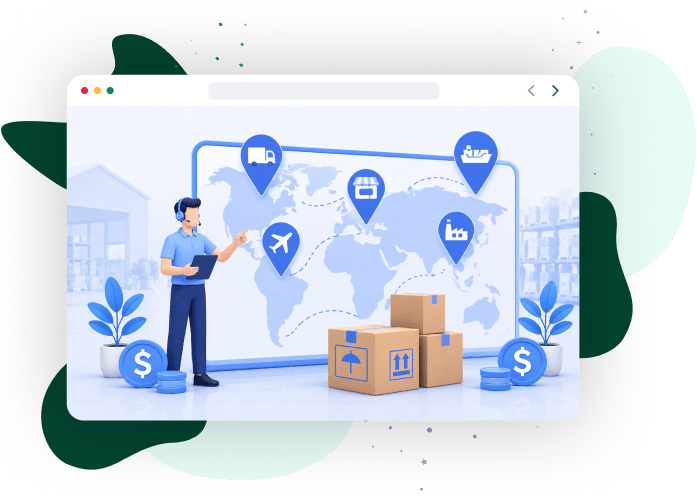
Supply chain software connects planning, procurement, inventory, warehousing, transportation, supplier collaboration, and analytics across a unified business ecosystem. Modern solutions combine enterprise applications, secure integrations, cloud infrastructure, and real-time data to improve operational visibility and decision-making.
According to Fortune Business Insights, the global supply chain management market is projected to grow from USD 32.9 billion in 2026 to USD 72.82 billion by 2034, driven by continued investment in digital supply chain technologies. Understanding this software landscape begins with the core capabilities every solution should provide.
Supply Chain Management Software Features
Supply chain management software brings together operational capabilities that support planning, execution, and performance management across the supply chain.
Core Features
- Visibility management
- Demand forecasting
- Inventory optimization
- Transportation management
- Supplier And procurement management
- Warehouse management
- Performance reporting And analytics
Supply Chain Visibility Software
Supply chain visibility software centralizes inventory, shipment, warehouse, and supplier data into a single operational view, enabling organizations to identify issues earlier and respond more effectively.
Core Capabilities
- Shipment and inventory tracking
- Exception detection
- Real-time operational alerts
- Compliance reporting
- Performance dashboards
Demand Forecasting Software
Demand forecasting software analyzes historical demand, inventory trends, lead times, and market patterns to support more accurate inventory planning.
Key Capabilities
- Demand forecasting
- Safety stock planning
- Replenishment planning
- Inventory exception monitoring
- Working capital optimization
Inventory and Logistics Optimization Software
Inventory and logistics optimization software coordinates inventory positioning, transportation planning, and procurement activities to balance product availability with operational costs.
Optimization Modules
Inventory Optimization
Transportation Management
Procurement Planning
- Safety stock planning
- Multi-location inventory balancing
- Reorder point management
- Inventory allocation
- Stock redistribution
- Route optimization
- Carrier management
- Shipment consolidation
- Freight cost analysis
- Delivery performance monitoring
- Purchase planning
- Supplier scheduling
- Material requirement planning
- Lead-time management
- Procurement exception monitoring
Supply Chain Management Software Modules
Supply chain management software is built on connected modules that manage inventory, warehousing, transportation, procurement, and planning. Each module supports a specific business function while sharing data across the supply chain to improve process coordination and operational visibility.
Core Software Modules
Warehouse Management System (WMS)
Controls inventory storage, warehouse operations, and order fulfillment.
Transportation Management System (TMS)
Plans shipments, manages carriers, and tracks freight movement.
Supports sourcing, purchasing, supplier collaboration, and material availability.
Manages demand planning, replenishment, capacity planning, and inventory strategies.
Warehouse Management System
A warehouse management system (WMS) streamlines warehouse operations by improving inventory accuracy, order fulfillment, and inventory movement within distribution centers.
Core WMS Capabilities
Real-Time Inventory Tracking
Records receipts, transfers, picks, adjustments, and shipments as they occur.
Barcode and RFID Support
Captures inventory transactions with greater speed and accuracy.
Inventory Slotting
Organizes storage locations based on product demand and handling requirements.
Order Fulfillment
Coordinates picking, packing, staging, and shipment preparation.
Warehouse Automation
Integrates with conveyors, AS/RS systems, robotics, and other material handling equipment.
Transportation and Procurement Software
Transportation and procurement modules connect logistics execution with purchasing activities, helping organizations maintain product availability while controlling transportation and sourcing costs.
| Business Challenge | Software Capability | Business Outcome |
|---|---|---|
| Rising freight costs | Route optimization and carrier management | Lower transportation costs |
| Delivery delays | Shipment planning and capacity management | More reliable deliveries |
| Supplier disruptions | Procurement planning and supplier coordination | Better material availability |
| Manual purchasing | Purchasing workflow automation | Faster procurement processes |
| Logistics exceptions | Alerts and exception management | Faster issue resolution |
Transportation management software improves freight planning and carrier performance, while procurement software aligns purchasing decisions with inventory demand and supplier lead times.
Supply Chain Planning Software
Supply chain planning software helps coordinate demand, inventory, procurement, production, and logistics through a shared planning process.
Planning Capabilities
- Sales and Operations Planning (S&OP)
- Workflow automation
- Capacity and resource planning
- Scenario analysis
- Exception management
- ERP integration
By connecting planning activities across business functions, organizations can respond more effectively to changing demand and operational constraints.
Supply Chain Software Security
Supply chain software security protects applications, source code, third-party components, deployment pipelines, and production environments from cyber threats. Effective security reduces the risk of unauthorized changes, software vulnerabilities, operational disruptions, and compliance violations.
Core Security Practices
Secure Software Development
Prevent unauthorized code changes through secure coding, reviews, and automated validation.
Third-Party Component Management
Validate software libraries, monitor vulnerabilities, and maintain Software Bill of Materials (SBOM) records.
Access Management
Protect critical systems with role-based access control (RBAC), multi-factor authentication (MFA), and privileged access controls.
Continuous Security Monitoring
Detect vulnerabilities and suspicious activity across applications and infrastructure.
Compliance and Governance
Apply security policies, audit controls, and industry standards throughout the software lifecycle.
Supply Chain Software Projects by iCommuneTech
Driving Measurable Results Across Industries
From automating manual calculations to modernizing legacy infrastructure, we build software that directly impacts the bottom line. Our custom solutions consistently reduce operational costs and accelerate process efficiency.
View Our Case Studies
Supply Chain Software Dependency Management
Modern supply chain applications rely on APIs, open-source libraries, SDKs, and third-party services. Managing these dependencies reduces security risks and improves long-term software reliability.
Dependency Management Practices
Maintain an SBOM to track software components, versions, and licenses.
Control Approved Dependencies by governing libraries, APIs, and third-party packages.
Monitor Vulnerabilities through continuous scanning and timely remediation.
Validate Third-Party Components before adoption based on maintenance history, support lifecycle, and security posture.
Manage License Compliance to reduce legal and operational risks.
Supply Chain Software Development Lifecycle
A structured development lifecycle helps organizations deliver secure, scalable, and maintainable supply chain software while reducing implementation risks.
Requirements Analysis
Define business processes, integration requirements, reporting needs, and compliance objectives before development begins.
Solution Design
Design the application architecture, data model, user workflows, and integration strategy.
Development and Integration
Develop application features and connect ERP, WMS, TMS, supplier platforms, and other business systems.
Testing and Quality Assurance
Validate functionality, performance, security, and system integrations before production deployment.
Deployment
Deploy the application through controlled release processes, validate production readiness, and ensure stable system rollout with minimal operational disruption.
Continuous Support
Monitor application performance, resolve issues, deliver security updates, and implement enhancements as business requirements evolve.
Supply Chain Software Platforms
Selecting the right supply chain software depends on business processes, integration requirements, scalability goals, and long-term technology strategy.
While enterprise platforms offer broad capabilities across supply chain operations, custom software provides greater flexibility for organizations with specialized workflows, legacy systems, or unique compliance requirements.
Enterprise Supply Chain Platforms
| Platform | Primary Strength | Consideration |
|---|---|---|
| iCommuneTech Custom Solutions | Tailored workflows, flexible integrations, and business-specific functionality | Requires custom planning and implementation |
| SAP | Comprehensive enterprise functionality for large organizations | Extensive configuration and implementation effort |
| Oracle | Cloud-native applications with an integrated business ecosystem | Best suited for Oracle-based environments |
| Infor | Industry-focused supply chain capabilities | Smaller partner ecosystem than larger enterprise vendors |
Evaluation Criteria
When comparing supply chain software platforms, consider:
iCommuneTech vs. SAP vs. Oracle vs. Infor
Each platform supports enterprise supply chain management, but their strengths vary depending on business priorities, existing technology investments, and implementation requirements.
| Evaluation Area | iCommuneTech | SAP | Oracle | Infor |
|---|---|---|---|---|
| Deployment Model | Custom-built around business requirements | Enterprise platform | Cloud enterprise platform | Industry-focused enterprise platform |
| Enterprise Operations | Designed around existing business processes | Excellent for global organizations | Strong multi-entity cloud support | Industry-focused capabilities |
| Integration | Custom ERP, WMS, TMS, CRM, API, and legacy integrations | Extensive enterprise ecosystem | Deep Oracle Cloud integration | Strong within industry-specific environments |
| Industry Coverage | Manufacturing, logistics, retail, healthcare, distribution, and other custom industries | Manufacturing, retail, logistics | Distribution, retail, manufacturing | Manufacturing, healthcare, distribution |
| Customization | Fully customized workflows, data models, and integrations | Highly configurable | Cloud extensibility | Industry-based configuration |
| Scalability | Designed to scale based on business architecture | Enterprise-grade scalability | Enterprise cloud scalability | Scalable within target industries |
| Typical Consideration | Requires discovery, architecture planning, and custom implementation | Longer implementation cycles | Best fit for Oracle environments | Smaller ecosystem |
Custom Supply Chain Software
Custom supply chain software is designed around your business instead of requiring your operations to adapt to a predefined platform. It is well suited for organizations with specialized workflows, complex integrations, regulatory requirements, or legacy systems that commercial software cannot fully support.
Where Custom Software Delivers Value
Why Choose iCommuneTech
iCommuneTech develops supply chain software that aligns with your operational goals, existing technology landscape, and long-term growth strategy.
Contact for custom supply chain software requirements. Contact UsOur services include:
- Custom application development
- Solution architecture
- Enterprise integrations
- Modernization roadmaps
- Performance measurement
- Ongoing application enhancement
AI in Supply Chain Software
Artificial intelligence (AI), machine learning (ML), automation, and digital twins help supply chain software analyze operational data, identify risks, and recommend actions faster than traditional rule-based systems. These technologies improve decision-making by turning operational data into actionable insights.
Core AI Technologies
Artificial Intelligence (AI)
Identifies demand patterns, operational risks, and optimization opportunities.
Machine Learning (ML)
Continuously improves prediction models using historical and real-time data.
Robotic Process Automation (RPA)
Automates repetitive business processes and manual workflows.
Digital Twins
Simulate supply chain scenarios before operational changes are implemented.
Advanced Analytics
Monitor KPIs, detect exceptions, and support faster operational decisions.
AI-Powered Supply Chain Optimization
AI strengthens supply chain optimization by analyzing large volumes of operational data and identifying opportunities that traditional planning methods may overlook.
AI Capabilities
Anomaly Detection
Identify unusual demand patterns, supplier issues, and logistics disruptions.
Scenario Modeling
Evaluate alternative responses before operational changes are made.
Decision Recommendations
Generate inventory, sourcing, and transportation recommendations from real-time data.
Adaptive Forecasting
Continuously refine prediction models as business conditions change.
Risk Prediction
Detect potential disruptions early to support proactive decision-making.
Blockchain For Supply Chain Traceability
Blockchain strengthens supply chain traceability by creating a shared, tamper-resistant record of product movement across suppliers, manufacturers, logistics providers, and customers.
These capabilities improve transparency, product traceability, and regulatory compliance across complex supply chains.
Blockchain Supply Chain Applications
Organizations adopt blockchain technology for processes that require trusted product history and auditable records.
Common Use Cases
Supply Chain Software Integrations
Reliable traceability depends on accurate data exchanged between connected business systems. Supply chain software integrates operational data from multiple platforms to maintain consistent records throughout the product lifecycle.
Integrated data supports traceability, reporting, and operational visibility across the supply chain.
Common Integration Points
- ERP systems
- Warehouse management systems (WMS)
- Transportation management systems (TMS)
- Supplier portals
- Manufacturing systems
- IoT devices
Supply Chain Software by Industry
Supply chain software adapts to the operational, regulatory, and fulfillment requirements of different industries. While the core platform remains the same, workflows, compliance standards, and performance priorities vary by business model.
| Industry | Primary Focus | Business Outcome |
|---|---|---|
| Retail | Demand planning, inventory availability, omnichannel fulfillment | Fewer stockouts and improved customer experience |
| Manufacturing | Production planning, material availability, supplier coordination | Higher production efficiency and schedule reliability |
| Transportation & Logistics | Shipment execution, fleet coordination, delivery visibility | Better asset utilization and on-time delivery |
| Healthcare | Product traceability, inventory control, regulatory compliance | Improved compliance and supply continuity |
| Distribution & Wholesale | Warehouse operations, inventory balancing, order fulfillment | Faster order processing and inventory efficiency |
Retail Supply Chain Software
Retail and e-commerce businesses require software that coordinates inventory, fulfillment, and order processing across physical stores, warehouses, marketplaces, and online sales channels.
Core Retail Capabilities
Omnichannel Inventory Management
Maintain accurate inventory across all sales channels.
Demand Sensing and Inventory Allocation
Position inventory based on changing demand.
Order Fulfillment and Last-Mile Delivery
Coordinate fulfillment and shipment execution.
Returns Management
Streamline reverse logistics and inventory updates.
Manufacturing Supply Chain Software
Manufacturing and distribution businesses depend on synchronized production, inventory, suppliers, and logistics to maintain product flow and meet delivery commitments. Supply chain software connects these processes to improve production planning, material availability, and distribution efficiency.
Core Manufacturing Capabilities
Supplier Collaboration
Coordinate supplier schedules, material availability, purchase orders, and supplier performance to reduce production delays.
Just-in-Time (JIT) Production
Support production-driven replenishment, material requirements planning (MRP), and inventory allocation to minimize excess inventory while maintaining manufacturing continuity.
Product Traceability
Track raw materials, components, work-in-progress, and finished goods to support quality management, regulatory compliance, and product recalls.
Manufacturing System Integration
Connect ERP, MES, WMS, inventory, and logistics systems to maintain consistent operational data across production and distribution.
Supply Chain Software Evaluation
Selecting supply chain software requires more than comparing features. The right solution should align with your operational processes, technology environment, and long-term business goals.
Evaluation Criteria
Functional fit
Scalability
Integration compatibility
Implementation expertise
Total cost of ownership
These criteria help identify software that supports current operations while accommodating future growth.
Supply Chain Software Buyer’s Checklist
Before selecting a solution, evaluate vendors against key business and technical requirements.
| Assessment Area | Key Question |
|---|---|
| Business Processes | Does the software support your existing workflows without significant customization? |
| Data & Reporting | Can it manage your transaction volumes and reporting requirements? |
| System Compatibility | Does it integrate with your current business applications? |
| Supplier Collaboration | Does it support supplier onboarding and ongoing collaboration? |
| Implementation | What resources, timeline, and organizational changes are required? |
| Security & Compliance | Does it meet your governance and regulatory requirements? |
| Business Value | Does the expected return justify the total investment? |
Custom vs. Off-the-Shelf Supply Chain Software
The choice between custom and commercial software depends on business complexity, integration needs, and long-term technology strategy.
| Evaluation Area | Custom Software | Off-the-Shelf Software |
|---|---|---|
| Process Fit | Built around business operations | Uses standardized workflows |
| Integrations | Designed for existing systems | Limited by available connectors |
| Deployment | Longer implementation | Faster initial rollout |
| Flexibility | High | Configuration-based |
| Cost Model | Higher upfront investment | Subscription or licensing costs |
| Long-Term Control | Full ownership of future enhancements | Vendor-driven roadmap |
When Custom Software Is the Better Choice
Custom supply chain software development is often the best fit for organizations with specialized operations, legacy systems, complex integrations, or industry-specific compliance requirements.
When Commercial Software Is the Better Choice
Commercial platforms are well suited to organizations seeking proven functionality, standardized processes, and faster deployment.
Supply Chain Software Implementation
Successful supply chain software implementation requires structured planning, reliable data migration, user adoption, and ongoing support. A well-executed implementation minimizes deployment risks, accelerates adoption, and helps organizations realize value from their technology investment.
According to The Hackett Group, procurement teams continue to manage growing workloads despite limited resources, increasing the demand for automation and digital transformation initiatives.
Implementation Best Practices
Successful software implementation depends on structured planning, seamless system integration, user adoption, phased deployment, and ongoing support to ensure long-term operational success.
Project Planning
Define business objectives, project scope, implementation milestones, and measurable success criteria before development begins.
ERP and System Integration
Connect ERP, WMS, TMS, CRM, and other business applications to maintain accurate data across operational processes.
Change Management
Prepare users through training, process documentation, and stakeholder engagement to encourage adoption and reduce disruption.
Phased Deployment
Roll out functionality in stages to reduce implementation risk and simplify organizational change.
Post-Deployment Support
Monitor system performance, resolve issues, deliver enhancements, and provide ongoing technical support after go-live.
ERP Integration Strategy
ERP integration is a critical part of supply chain software implementation because it connects operational data across business systems.
Key Success Factors
Design reliable data exchange between enterprise applications.
Cleanse, validate, and migrate business data before deployment.
Align implementation goals with business priorities.
Deploy functionality in manageable phases.
Equip users with the knowledge needed to maximize software adoption.
Supply Chain Software Development Models
The right development approach depends on project scope, business priorities, and delivery timelines.
| Methodology | Best For |
|---|---|
| Agile | Evolving requirements and iterative delivery |
| Waterfall | Well-defined scope and compliance-driven projects |
| Hybrid | Large transformation initiatives that require both planning and flexibility |
Engagement Models
Fixed-Price Projects
Defined scope, budget, and timeline.
Dedicated Development Teams
Extend internal teams with specialized expertise.
Managed Services
Ongoing maintenance, monitoring, and enhancement.
End-to-End Delivery
Design, development, integration, deployment, and long-term support.
Supply Chain Software Development Costs
The cost of supply chain software development depends on project scope, business requirements, system complexity, and the level of customization. Total investment extends beyond development to include implementation, training, maintenance, and future enhancements.
Cost Factors
Solution Scope
The number of modules, features, and business processes included in the project.
Custom Development
The level of customization required to support business-specific workflows.
System Integrations
Connections with ERP, WMS, TMS, CRM, supplier platforms, and third-party applications.
Data Migration
Preparing, validating, and transferring data from existing systems.
Deployment and Training
User onboarding, documentation, and rollout activities.
Ongoing Support
Application maintenance, performance improvements, security updates, and feature enhancements.
Budget Planning
A successful project budget balances implementation costs with long-term business value. Prioritizing high-impact initiatives, such as procurement process optimization, helps organizations maximize return on their software investment while supporting future growth.
Supply Chain Software Architecture
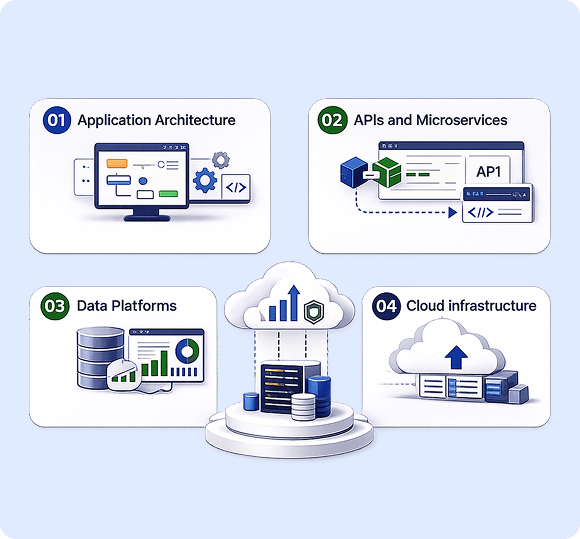
A well-designed architecture enables supply chain software to scale with business growth, support system integrations, and maintain reliable performance across high transaction volumes. The right architecture also simplifies future enhancements without disrupting day-to-day operations.
Core Architecture Components
Application Architecture
Organizes business services and application logic for maintainability.
APIs and Microservices
Connect enterprise systems while supporting flexible application development.
Data Platforms
Manage operational data, analytics, and reporting across the supply chain.
Cloud Infrastructure
Provide scalable computing resources, availability, and disaster recovery.
These components create the technical foundation for secure, scalable, and high-performing supply chain software.
Open Source vs. Proprietary Supply Chain Software
Open source and proprietary platforms offer different advantages depending on business requirements, available technical resources, and long-term support expectations.
| Evaluation Area | Open Source | Proprietary |
|---|---|---|
| Customization | Full source code access | Configuration within vendor capabilities |
| Licensing | Lower licensing costs | Commercial licensing |
| Vendor Support | Community or third-party support | Dedicated vendor support |
| Maintenance | Managed internally | Vendor-managed updates |
| Best Fit | Organizations requiring maximum flexibility | Organizations seeking managed enterprise solutions |
Many organizations combine both approaches to balance flexibility, support, and long-term maintainability.
Supply Chain Software Security Infrastructure
Beyond secure software development, production environments require infrastructure that protects business applications, operational data, and user access.
These controls strengthen operational security and help organizations meet regulatory and compliance requirements.
Infrastructure Controls
Supply Chain Analytics
Supply chain analytics transforms operational data into actionable insights that improve planning, inventory management, procurement, warehousing, and logistics. By combining data from multiple business systems, organizations gain a clearer view of performance and make faster, data-driven decisions.
Learn more about our Supply Chain Analytics solutions.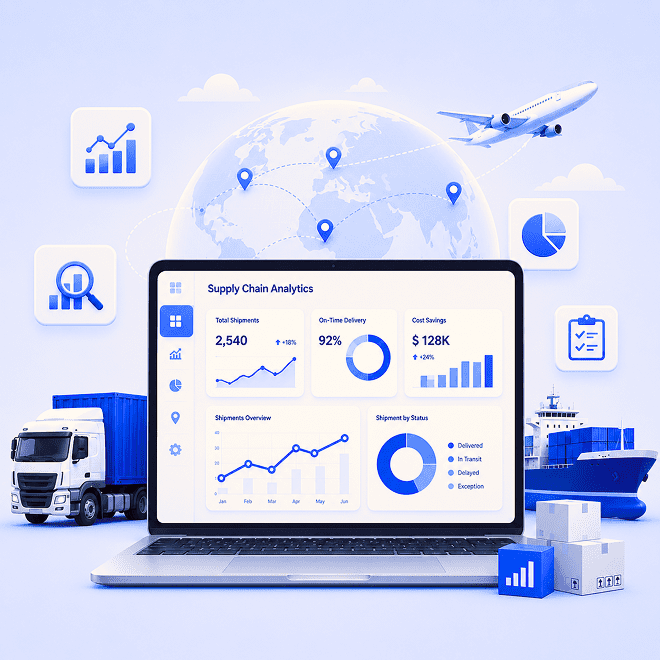
Data Management
Accurate analytics starts with reliable data. Supply chain software consolidates information from enterprise applications to create a consistent foundation for reporting and operational analysis.
Data Management Capabilities
- Consolidate data from ERP, supplier, warehouse, inventory, and transportation systems.
- Standardize business data across operational processes.
- Improve reporting accuracy and data consistency.
Real-Time Supply Chain Visibility
Real-time analytics helps operations teams monitor supply chain performance as events occur, allowing faster responses to disruptions and operational exceptions.
Visibility Capabilities
- Operational dashboards
- Shipment and inventory monitoring
- Exception alerts
- KPI reporting
Supply Chain Data Integration
Connected data improves reporting, collaboration, and decision-making across the supply chain.
Integration Components
- ERP platforms
- Inventory management systems
- Supplier portals
- IoT devices
- Middleware and API platforms
Data Governance
- Master data management
- Data quality standards
- Governance policies
Predictive Supply Chain Analytics
Predictive analytics identifies trends, evaluates operational risks, and supports proactive decision-making using historical and real-time business data.
Predictive Capabilities
Trend analysis
Transportation risk analysis
Disruption forecasting
Scenario planning
Decision support
Supply Chain Software ROI
Supply chain software creates business value by improving operational efficiency, reducing costs, and supporting better decision-making across the supply chain. Measuring ROI helps organizations evaluate the impact of their technology investment and identify opportunities for continuous improvement.
Key Business Benefits
- Lower Operating Costs: Automate manual processes and reduce administrative effort.
- Faster Order Fulfillment: Shorten planning, processing, and delivery cycles.
- Improved Inventory Utilization: Reduce excess inventory while maintaining product availability.
- Higher Service Levels: Improve order accuracy, delivery performance, and customer satisfaction.
- Greater Supply Chain Resilience: Respond more effectively to operational disruptions and changing market conditions.
Common ROI Metrics
Organizations often measure supply chain software performance using:
- Inventory turnover
- Order cycle time
- Order fulfillment accuracy
- Transportation costs
- Inventory carrying costs
- On-time delivery performance
Tracking these metrics helps quantify operational improvements and demonstrate long-term business value.
Why Choose iCommuneTech
iCommuneTech develops custom supply chain software that aligns technology investments with measurable business outcomes. Our team designs, develops, integrates, and supports scalable solutions that help organizations improve efficiency, increase operational visibility, and adapt to changing business requirements.