Fuel Management System Development
Fuel management system enables fuel purchase tracking, consumption analytics, compliance monitoring, and alert-based fuel optimization for transportation, logistics, and delivery companies.
iCommuneTech develops robust fuel optimization software integrated with TMS, ERP, CRM, and fleet management system environments. The software aligns fuel usage, procurement tracking, and consumption monitoring to reduce fuel waste, detect suspicious fuel consumption, and control operating costs.
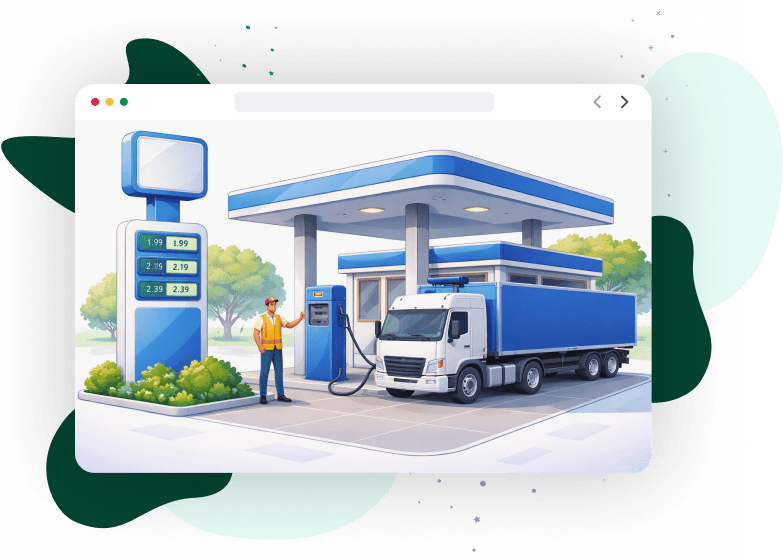
What Fuel Management Capabilities Can Your TMS Platform Gain?
A TMS platform gains fuel analytics, fuel intelligence, and operational control when fuel becomes a native product capability. Embedded analytics convert telemetry data and ELD data into actionable visibility across routing, dispatch, and post-trip analysis.
- Increased operational efficiency from 40% to 90%
- Improved customer satisfaction by 60%
- Delivered full ROI within six months
Modular fuel intelligence capabilities:
Explore Our Fleet Management System Demo
Review embedded fuel analytics across dispatch, routing, and vehicle management workflows. Examine dashboards, alerts, and reports functioning as native TMS product capabilities.
Capacity utilization
Constraint handling
Load sequencing
Why TMS Companies Build A Native Fuel Management System
TMS companies build native fuel management systems to retain data ownership, embed fuel intelligence directly within routing and dispatch workflows, and protect long term product margins.
Native development ensures architectural alignment and preserves control over analytics, algorithms, and roadmap direction.
In a route-based fuel optimization platform, automated refueling intelligence reduced fuel planning time by 50%. This demonstrates how embedded fuel workflows accelerate operational decisions.
Limitations of third-party SaaS fuel tools:
- No workflow-level embedding
- Restricted raw telemetry access
- Limited behavioral data visibility
- Vendor-controlled feature roadmap
- Constrained fuel analytics customization
- Licensing fees scale with user volume
- UI/UX misalignment
- Weak multi-tenant and white-label support
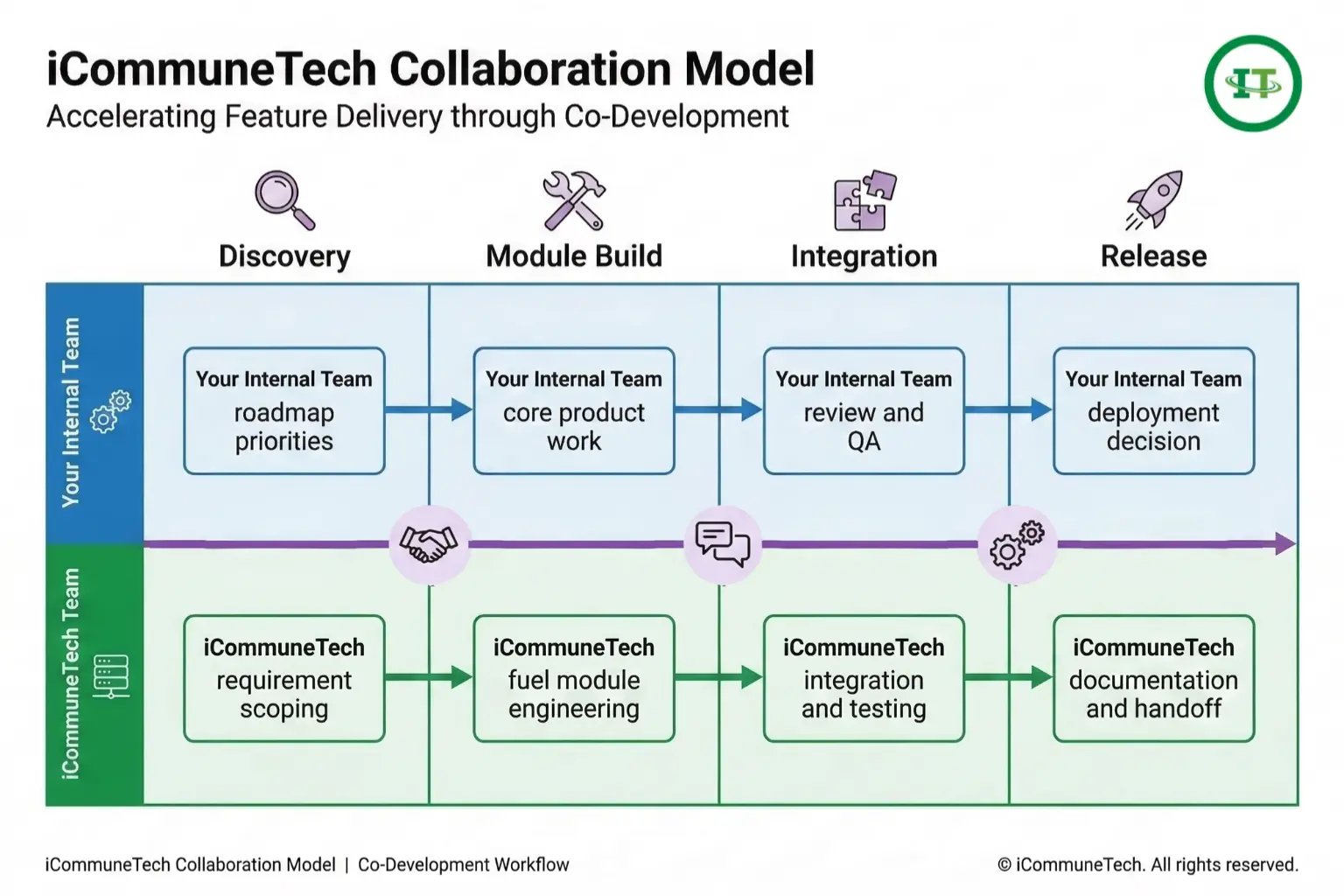
How iCommuneTech Helps IT Product Companies Deliver New Features Fast Enough?
iCommuneTech helps product companies launch new features faster by working closely with their internal teams. We build complex fuel and TMS modules while your engineers stay focused on core product priorities. Our team fits into your workflow, follows your roadmap, and delivers features without slowing down ongoing releases.
“iCommuneTech helped us turn our concept into a practical and data-driven platform. The team quickly understood our operational needs and delivered a solution aligned with our goals. Our drivers now identify cost-efficient fuel options along optimized routes, which improves both time management and fuel savings. Mobile features such as fuel invoice handling and card management enhanced usability for our clients. We value the team’s professionalism, responsiveness, and technical competence throughout the engagement.”

Why to have Fuel Management System in your Product Roadmap is Important?
Including a fuel management system in your product roadmap is important because fuel costs significantly impact fleet operations, and customers expect built-in fuel visibility within modern TMS platforms. When fuel analytics are integrated into the core system, routing, dispatch, and fuel data work together. This creates better operational control and reduces dependency on third-party tools.
Strategic reasons to include fuel management in your roadmap:
By planning fuel management as a native capability, your platform evolves from offering basic tracking to delivering structured operational intelligence that supports long-term product growth.
Build vs Buy: Should You Develop a Fuel Module or Integrate Third-Party Tools?
The decision to build or buy a fuel management module depends on how much control, scalability, and long-term flexibility your TMS product requires. If fuel analytics are expected to become a core capability of your platform, custom development provides architectural alignment and full ownership. If the goal is rapid deployment with limited customization, third-party tools may offer a faster initial setup.
Comparison Overview
| Comparison Attribute | Custom Build | Off-the-Shelf Fuel Apps / APIs |
|---|---|---|
| Time-to-market | Planned releases aligned with the roadmap | Fast start with limited depth |
| Cost scalability | Predictable as users scale | Costs rise with usage volume |
| Integration effort | Native integration with TMS services | Partial integration through APIs |
| Data ownership | Full ownership of fuel and telemetry data | Vendor-controlled data access |
| UI/UX control | Complete alignment with product design | Fixed interfaces and constraints |
| Multi-tenant SaaS fit | Built for SaaS architecture | Often single-tenant focused |
| Custom analytics | Unlimited algorithm control | Restricted to predefined metrics |
| API limitations | None within the platform boundary | Rate limits and feature caps |
Summary
Custom development supports long-term product control, deeper workflow integration, and margin protection at scale. Third-party tools can reduce initial development effort but may introduce integration limits, rising licensing costs, and restricted product flexibility over time.
For TMS companies planning to expand fuel intelligence as a strategic product capability, building a native module often provides stronger long-term alignment.
Fuel Management Module Development Services for TMS and Logistics Software Platforms
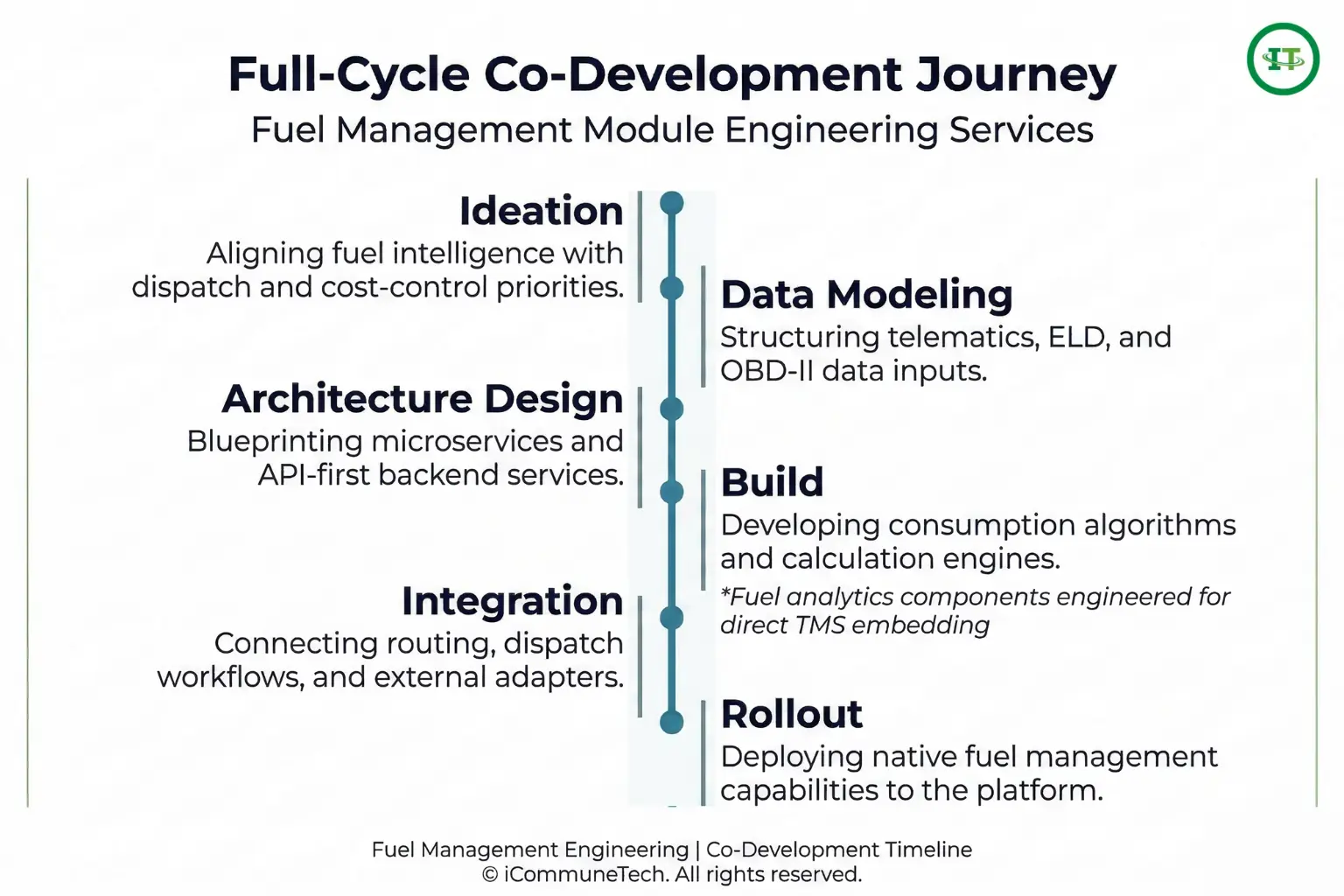
iCommuneTech delivers fuel management module development services structured for enterprise TMS platforms and logistics software systems. The approach follows full-cycle co-development, covering ideation, data modeling, architecture design, build, integration, and rollout.
Engineering teams align fuel intelligence capabilities with dispatch workflows, routing optimization, and cost-control priorities. Proven logistics platform experience strengthens delivery reliability and domain depth. Services focus on product-grade fuel analytics components designed for direct embedding into TMS environments.
Core engineering services include
This delivery model ensures fuel intelligence launches as a native TMS capability, not an external dependency.
Architecture & Technology Stack for Fuel Management System
The fuel management module uses a modular plug-in architecture embedded within TMS platforms. It supports real-time dispatch operations without disrupting planning workflows. A modernized TMS platform increased fuel and operational efficiency from 40% to 90% after unifying fuel and dispatch systems. Independent services enable scalability, fault isolation, and controlled performance tuning.
Click layers to hold function descriptions
Technology Stack:
- Backend microservices built using .NET, Node.js, or Java through scalable software development services
- Databases: PostgreSQL, PostGIS, TimescaleDB
- Streaming: Kafka or RabbitMQ
- Cloud: AWS, Azure, or GCP
- AI/ML: Python, TensorFlow, PyTorch
Modular Architecture Components:
- Analytics microservices managing consumption calculations, scoring, and alerts
- Time-series data layer storing high-volume fuel events
- Machine learning engine forecasting fuel consumption and cost trends
- Event-driven processing layer supporting real-time dispatch decisions
- Integration services connecting routing and dispatch modules
- API gateway enforcing authentication and access control
- Administrative console managing rules, thresholds, and configurations
- White-label UI modules for dashboards and visualization
Integration With Your Existing TMS Architecture
The fuel management module integrates directly into enterprise TMS platforms without disrupting existing workflows. It operates as a native extension of your logistics management software, ensuring consistent data flow across routing, dispatch, and financial systems.
Integration Benefits:
- Unified data model across fuel, routing, and dispatch
- Cross-module operational insights
- Multi-tenant SaaS alignment
- Event-based real-time updates
Key Integration Points
- Telemetry ingestion from vehicles connected to a fleet tracking system
- Vehicle master data synchronization
- Native integration with route optimization and dispatch management modules
- Driver profile mapping for behavior analysis
- Fuel receipt or card API ingestion
- ERP and custom CRM development integration
Fuel Management System Customization and Integration Flexibility
Enterprise TMS platforms require fuel modules that support multiple tenants without introducing separate code bases. Customization ensures per-client control while preserving platform stability and scalability.
Customization capabilities include:
This approach enables controlled flexibility while maintaining architectural consistency across the platform
How Does iCommuneTech Offload and Bring Innovation In For TMS Engineering Teams?
iCommuneTech helps TMS engineering teams offload complex module development while retaining full control over product roadmap and source code. The collaboration model allows internal teams to focus on strategic priorities while new fuel intelligence and platform capabilities are developed in parallel. Our team works alongside product and engineering units to deliver scalable TMS components without disrupting existing release cycles.
Cost & Timeline of Building a Custom Fuel Management System
The cost and timeline of building a custom fuel management system depend on functional scope, data complexity, and integration depth within your TMS platform.
Pricing varies based on analytics requirements, telematics integration, scalability targets, and UI scope. Engagement models may include time and materials or a dedicated engineering team, depending on project structure.
An interactive cost calculator can provide a directional estimate for investment. It evaluates selected fuel modules, telematics, and sensor complexity, forecasting and analytics depth, dashboard requirements, and integration coverage across enterprise systems. Based on fleet size, data volume, and deployment model, it estimates engineering effort and expected delivery time.
Fleet Management System Calculator
Cost factors include:
High-level delivery timeline:
When Should TMS Companies Build Their Own Fuel Management System?
TMS companies should consider building their own fuel management system when fuel intelligence becomes a core part of product differentiation, margin protection, and operational decision-making. Custom development becomes relevant when third-party tools no longer provide the required depth, flexibility, or cost efficiency.
Building becomes strategically justified when fuel data directly influences dispatch performance, pricing strategy, and overall product positioning.
Fuel Management System Implementation Impact on your TMS Product ROI
Implementing a native fuel management system impacts TMS product ROI by improving operational efficiency, increasing customer retention, and creating additional revenue opportunities
When fuel intelligence is embedded within routing and dispatch workflows, operational data becomes actionable at the product level. This strengthens platform value while reducing dependency on external fuel tools.
Business Impact
- Increased product stickiness across dispatch and planning workflows
- Opportunity to introduce premium fuel analytics modules
- Improved competitive positioning in fuel-sensitive markets
- Margin protection by reducing reliance on third-party APIs
- Conversion of proprietary fuel algorithms into long-term IP assets
Embedding fuel insights into daily operational workflows supports customer retention and recurring value realization.
Case Studies: Fuel Analytics, Telematics, and Optimization Systems We Built
Efficient Modernisation of 20-Year-Old TMS SaaS
The following case study demonstrates experience in delivering fuel analytics, telematics integration, and workflow optimization for enterprise TMS platforms. The project highlights measurable outcomes achieved through unified fuel and dispatch systems.
The team built a unified fuel management module embedded into an existing TMS platform. The solution consolidated fuel tracking, invoicing, ELD data, and dispatch workflows into a single operational interface. The system supported fleet, courier, and regional transportation operations across the U.S.
Check more success storiesMeasured impact:
Fuel and TMS operational efficiency increased from 40% to 90%
Discuss Integrating a Fuel Management Module Into Your TMS
Evaluate your current architecture, fuel data workflows, and product roadmap priorities. Determine whether a native fuel management module aligns with your scalability goals and long-term product strategy.