
Small fleet maintenance software is a digital platform that helps small businesses plan, track, and automate vehicle maintenance schedules, ensuring uptime, cost control, and compliance. Every missed maintenance check can cost a small fleet thousands in unexpected repairs. Overlooked vehicle issues compound quickly when upkeep relies on manual logs. This risk increases when teams operate without maintenance automation.
A single breakdown can delay routes. It can disrupt schedules and tighten already constrained budgets. Running a small fleet demands clarity and consistency. User-friendly maintenance platforms support clarity and consistency by centralizing schedules and vehicle data. These platforms reduce missed maintenance tasks and manual follow-ups without adding operational complexity.
Modern solutions link telematics data with preventive maintenance schedules based on real vehicle usage. Real-time vehicle data informs everyday maintenance decisions. Specialized Platforms further align workflows with distinct operational needs. These needs range from local delivery fleets to service-based vehicles.
As fleets scale, maintenance decisions increasingly influence financial outcomes. Structured cost control helps limit unplanned expenses. Continuous fleet health management stabilizes operations during expansion. Smooth implementation delivered a 90% improvement in operational efficiency and a 60% increase in user productivity.
As maintenance impacts cost and scalability, a clear software comparison helps teams choose the right platform. The right choice supports growth without added complexity. It positions maintenance as a strategic function that strengthens reliability, efficiency, and operational resilience.
User-Friendly Maintenance Platforms That Support Cost Control and Scalable Growth
Managing a small fleet requires fleet management tools that prioritize ease of use and flexibility. A well-planned fleet maintenance software provides a clean interface that allows managers to handle tasks without extensive training. Dashboards highlight upcoming services, overdue maintenance, and a clear snapshot of each vehicle’s condition.
Built-in workflow customization supports fleets with different operating routines. Teams can configure reminders for oil changes, tire rotations, brake inspections, or engine checks. These reminders are triggered by mileage thresholds or fixed calendar schedules.
Service records can be sorted by vehicle, driver, route, or date. This structure simplifies inspections and compliance reporting. Mobile maintenance apps extend access to phones and tablets, allowing drivers or mechanics to update records in real time. This reduces manual entry delays and improves data accuracy.
A straightforward design combined with configurable workflows helps small fleet owners stay proactive. Vehicles remain in optimal condition, and maintenance teams can address issues before breakdowns disrupt operations.
Easy-to-Use Fleet Maintenance Software Streamline Operations
- Small teams need tools that get up and running quickly without constant oversight or technical support. Small fleet management software designed for usability removes the need for formal training or IT involvement. Dashboards present upcoming services, overdue tasks, and vehicle status at a glance, even when vehicles operate across multiple locations.
- Maintenance schedules and service records update quickly as work is completed. Mobile access allows drivers or mechanics to log maintenance activity immediately instead of waiting to return to the office. This keeps records current and reduces delays caused by manual updates.
- In practice, this usability leads to more accurate maintenance records and far less paperwork. Small teams can maintain compliance, keep vehicles safe, and ensure assets remain ready for daily operations without increasing administrative workload.
Configurable Options for Unique Small Fleet Workflows
- No two small fleets operate the same way, which makes flexibility essential. Small fleet maintenance software with changeable features allows teams to adapt the system based on vehicle type, usage patterns, and service priorities. This ensures maintenance workflows reflect how the fleet actually operates.
- Maintenance triggers can be configured by mileage, engine hours, or time intervals to match real operating conditions. Custom fields capture inspection, compliance, and route-specific data consistently across locations. This reduces reporting gaps and keeps maintenance records audit-ready. These configurations improve accuracy across diverse fleet environments.
- With small fleet vehicle maintenance software, teams adapt the platform to existing routines instead of changing established processes. This reduces missed services, improves record reliability, and keeps vehicles consistently ready for operation.
Role of Mobile Apps in Small Fleet Maintenance
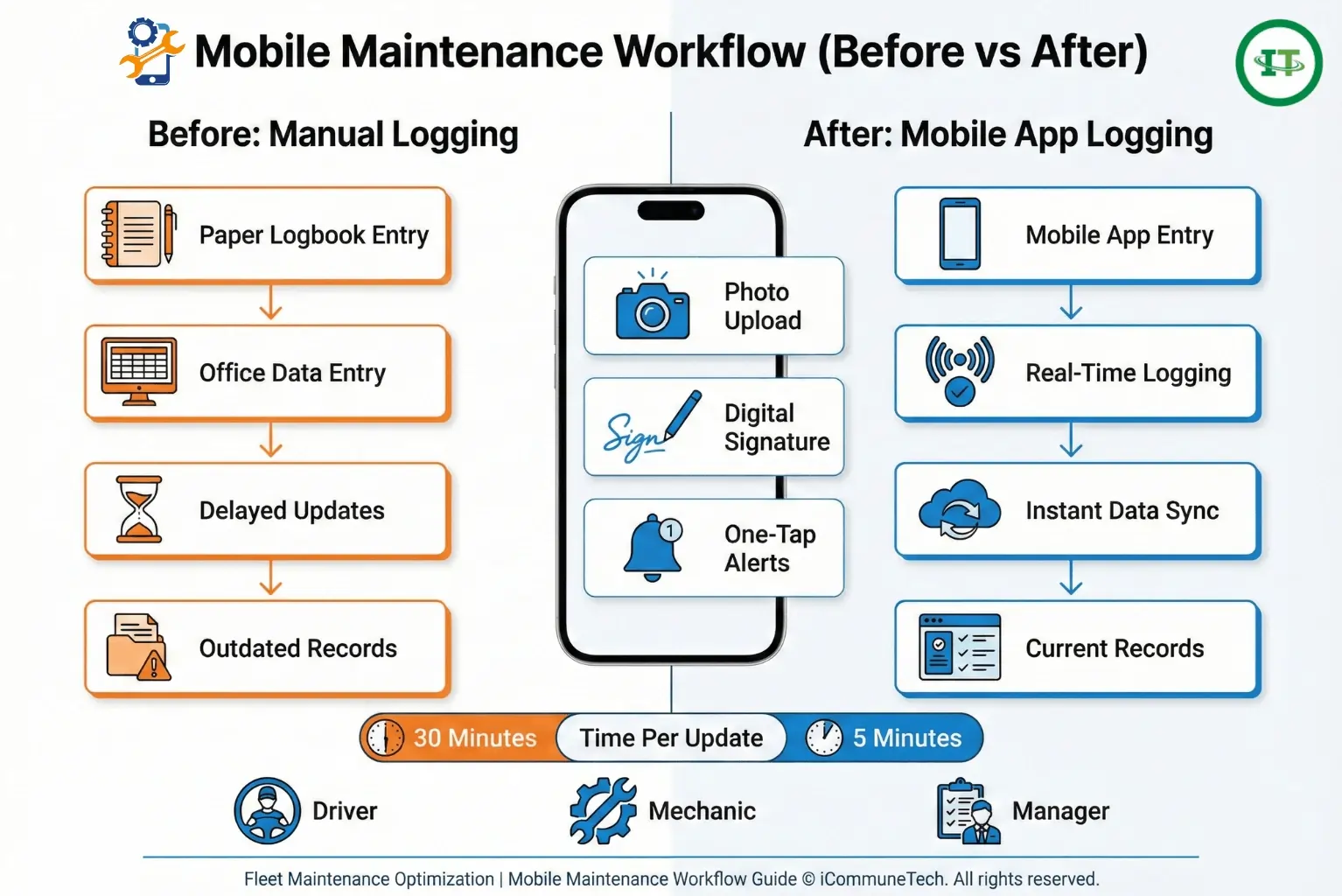
- Mobile apps help prevent outdated or incorrect maintenance entries by enabling real-time updates. Small fleet maintenance software access through smartphones or tablets allow drivers to log oil changes, inspections, and minor repairs at the moment work is completed. This speeds up data collection and improves data accuracy across the fleet.
- Managers can review maintenance status, approve work, and respond to alerts across locations without delay. This improves coordination and supports timely decisions across logistics management. With small fleet vehicle maintenance software, reporting delays are reduced, and compliance tracking becomes more consistent.
- Consistent mobile updates help maintain uniform maintenance standards across the fleet. Teams stay aligned on service status, records remain complete, and maintenance workflows remain uninterrupted regardless of location or role.
Specialized Maintenance Platforms by Use Case
Small fleets have distinct operational demands, and generic tools feel restrictive. Many maintenance platforms now offer cloud-based maintenance options tailored to specific vehicle types, such as delivery trucks or service vans. These systems provide schedules and reports aligned with how those operations actually run.
Service-focused fleets use shop-focused maintenance tools to centralize repairs, parts, and technician activity. This speeds repairs, improves coordination, and keeps vehicles available for service. For fleets operating under government or municipal oversight, public fleet compliance support helps manage inspections, documentation, and regulatory schedules without manual tracking.
Mixed-use fleets use industry-specific maintenance configurations to manage different vehicle classes and equipment needs. This simplifies routine maintenance and reduces administrative effort. Choosing a platform designed for the fleet’s operating model simplifies routine maintenance and reduces administrative effort.
Cloud-Based Fleet Maintenance
Cloud-based platforms simplify fleet maintenance by centralizing data in one accessible system. With cloud-hosted small fleet maintenance software, managers, mechanics, and drivers can access schedules, log repairs, and monitor vehicle health.
Cloud-based software provides consistent reporting, standardized workflows, and immediate insight into the fleet across locations. This removes reliance on local servers and keeps maintenance records available across locations.
This keeps maintenance records current and reduces the chance of lost or outdated information. For fleets spread across multiple locations, cloud access ensures consistent reporting, timely alerts, and smooth compliance tracking.
Cloud-based dashboards provide real-time tracking across locations. This enables remote coordination and reduces unexpected vehicle downtime.
Shop-Focused Maintenance
Shop-focused maintenance builds the system around garage work at the center of fleet care. It gives mechanics and managers the tools they need to streamline repair workflows and routine servicing. Small fleet maintenance software designed for shop use allows teams to schedule work orders. It allows them to track repair progress and log parts or labor immediately.
This reduces errors, prevents duplicate work, and ensures each vehicle receives timely attention. Mechanics can update service records as soon as the work’s done, and managers get a quick check on current jobs. For shops handling multiple vehicles at once, this approach eases the daily flow, ensures accurate parts tracking, and simplifies inspections.
By keeping everything in one system, fleets benefit from quicker vehicle returns. They benefit from a more dependable fleet and fewer unexpected breakdowns, keeping vehicles ready for the road.
Compliance Adherence for Public Sector and European Fleets
Public and European fleets face strict regulations and operational challenges that require precise maintenance tracking. Small fleet vehicle maintenance software helps meet compliance rules with local and EU inspections. The inspection includes emission checks and safety audits. Managers, drivers, and maintenance teams can log the operations.
Managers can get updates regarding repairs, track service history, and receive alerts for regulatory tests like MOT or emissions.
Public sector fleets, such as municipal buses or utility vehicles, benefit from simpler record handling. They benefit from faster coordination with service shops and more time on the road. Keeping all operational records under one system and regular automatic updates helps maintain reliability. It reduces compliance risks and prevents unexpected downtime.
Telematics-Driven Fleet Management and Vehicle Tracking
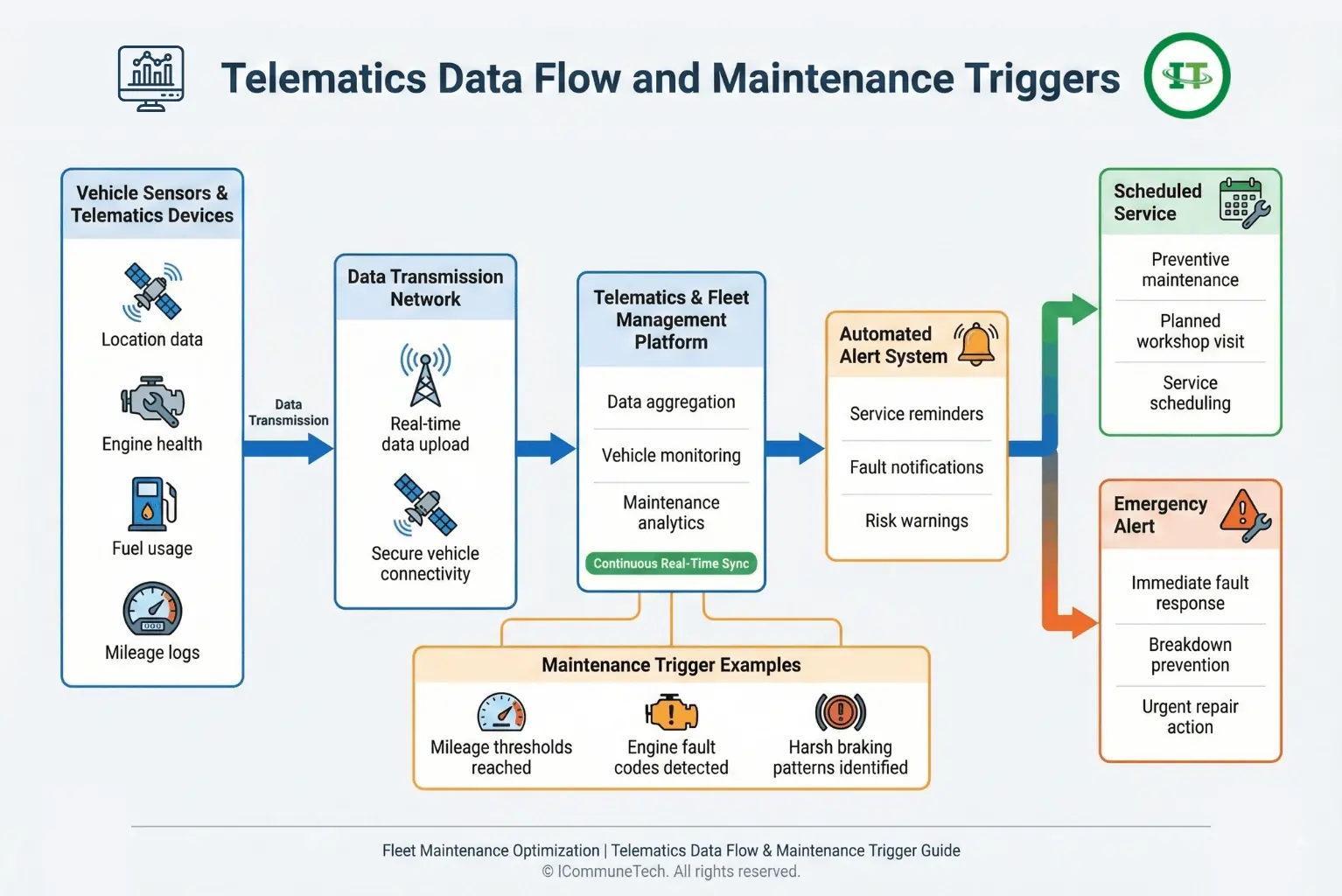
Telematics-driven fleet management uses vehicle-installed sensors and GPS systems to collect real-time location, usage, and diagnostic data in one platform. It relies on real-time telematics to combine GPS tracking and onboard diagnostics, giving fleets clear insight into vehicle location and usage patterns.
In major markets such as the United States, 49% of large fleet operators use telematics for route optimization and asset tracking, signaling strong commercial adoption. Live vehicle data provides early visibility into mechanical health as issues emerge. Managers can track mileage, engine performance, and fault codes as they occur.
Continuous telematics updates improve maintenance planning accuracy. Service alerts align more closely with actual vehicle conditions rather than static schedules. Vehicle tracking strengthens fleet safety by monitoring route adherence, drivers’ break patterns, risky driving behavior, and operational inefficiencies in real time.
When telematics data integrates with maintenance records, issues surface earlier. This reduces unexpected repairs, extends vehicle lifespan, and supports consistent fleet accountability.
Benefits of Real-Time Telematics and GPS Tracking
- Operational data is captured the moment it is generated. Real-time telematics feeds location, mileage, and engine data directly into small fleet maintenance software, eliminating delays caused by manual reporting and fragmented updates.
- With accurate, current data available, routing adjustments happen faster, and disruptions are addressed as soon as they occur. Mechanical issues are identified before they escalate, and maintenance planning becomes more precise because service timing reflects real vehicle usage instead of estimates.
- GPS tracking strengthens daily operational awareness across the fleet by making vehicle locations easy to confirm and route deviations easier to detect. When tracking data connects with small fleet vehicle maintenance software, usage patterns become clearer, supporting better scheduling decisions and faster deliveries.
- Together, telematics and GPS tracking improve control and reliability without increasing administrative workload. Fleets gain stronger visibility while maintaining efficient, streamlined maintenance and operations management.
Fleet Safety and Driver Behavior
- Fleet safety improves when driver performance is evaluated using recorded vehicle data rather than assumptions or periodic checks. Telematics data highlights specific behaviors such as harsh braking, speeding, excessive idling, or unexpected route use that go unnoticed in manual reviews.
- With this level of insight, fleet managers can respond sooner and address safety risks based on evidence instead of inference. When telematics insights are integrated with small fleet maintenance software, safety reviews gain operational context tied to vehicle condition and service history.
- Driver behavior can be analyzed alongside vehicle health trends, helping managers determine whether recurring issues stem from driving habits or underlying mechanical wear. This combined view supports more accurate decisions and targeted corrective actions that improve both safety and fleet performance.
- Managers gain visibility into repairs, service history, and regulatory alerts, including MOT and emissions testing schedules. Cloud-based software delivers standardized workflows, consistent reporting, and real-time insight across fleet locations.
- Public sector fleets such as municipal buses or utility vehicles benefit from simplified record handling, faster coordination with service shops, and improved vehicle availability. Centralized systems with automatic updates reduce compliance risks, prevent unexpected downtime, and support long-term fleet reliability.
Cost Control and Maintenance Efficiency
Cost control in fleet operations depends on how accurately maintenance decisions are made. Traditional service schedules rely on fixed intervals, even though equipment usage varies widely. Over time, inspection notes and service records reveal which assets receive timely attention and which fall behind planned preventive maintenance cycles.
Usage data adds another layer by indicating where downtime is most likely to occur. Maintenance planning shifts from reacting to failures toward managing vehicles within real operating limits. This approach reduces unexpected breakdowns and stabilizes maintenance spend.
Maintenance records also play a direct role in controlling costs. Small fleet maintenance software centralizes service history, parts usage, and repair patterns in one system. When reviewed alongside mileage and fuel expense tracking, cost trends become easier to identify. Inefficiencies tied to fuel consumption or excessive wear surface through these combined insights.
Addressing these issues earlier helps prevent unnecessary spending. With small fleet vehicle maintenance software, teams plan maintenance more accurately, extend vehicle life, and maintain operational stability without increasing administrative effort.
Reducing Downtime Through Preventive Maintenance
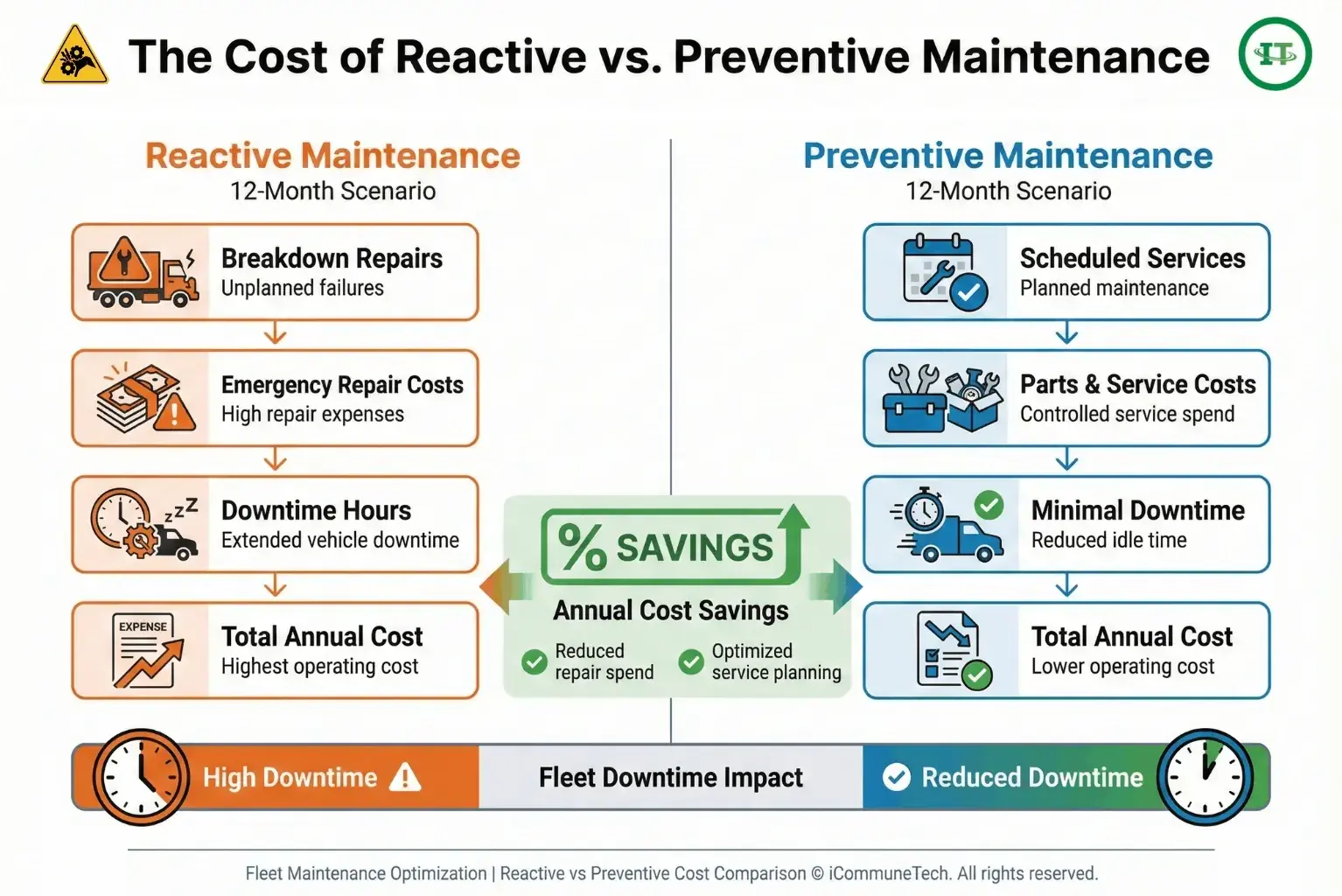
- Preventive maintenance decisions rely on early indicators rather than visible vehicle wear. Mileage and inspection findings are reviewed long before a vehicle shows obvious issues, since fixed service dates rarely reflect how differently assets are used. Predictive maintenance can reduce maintenance costs by up to 25% and cut unplanned downtime by nearly 50% when analytics and predictive approaches are applied, reinforcing the value of data-driven maintenance planning.
- Maintenance decisions increasingly rely on past service records and route demands rather than assumptions about timing. The goal is to keep vehicles available and reliable without forcing last-minute changes that disrupt schedules. This approach supports steadier fleet operations.
- Consistent record-keeping plays a central role in preventive maintenance success. It highlights the benefits of a fleet management system by supporting uninterrupted fleet operations and long-term reliability. Small fleet maintenance software tracks recurring issues, parts replacements, and service timing across vehicles, making patterns easier to identify.
- When paired with small fleet vehicle maintenance software, preventive planning becomes more effective. Teams can schedule maintenance windows more accurately and avoid repeat breakdowns. The result is fewer emergency repairs, steadier operations, and improved fleet reliability without added administrative effort.
Fuel Management and Expense Tracking Tools for Small Fleets
- Fuel expenses rise unevenly across vehicles or routes, making gradual cost increases harder to detect. When usage figures are reviewed by vehicle or route, patterns begin to explain where differences originate, even though not every change immediately signals a problem. This visibility helps teams recognize early indicators of inefficiency before costs escalate.
- Mileage and maintenance records add important context to fuel expense analysis. These records highlight patterns such as excessive idle time or inefficient routing that may otherwise go unnoticed. Decisions informed by this data tend to be more deliberate rather than reactive, after expenses have already increased.
- Accurate expense tracking depends on clean, centralized records across fleet operations. Small fleet maintenance software consolidates fuel transactions, service costs, and operating data into one system, reducing manual reconciliation. When integrated with small fleet vehicle maintenance software, fuel trends can be directly tied to vehicle condition and performance.
- This data connection helps small fleets maintain financial stability over time. Operating expenses become easier to control, and maintenance planning benefits from improved cost awareness. Fleets can make informed decisions that balance fuel efficiency, vehicle health, and long-term budget planning.
Parts, Inventory, and Maintenance Workflow Automation
Inventory data does not always reflect how parts are actually consumed during maintenance work. Gaps in records or separation from service activity can slow repairs and increase costs. Parts availability determines how long vehicles remain off the road.
Centralized parts inventory management helps teams track usage patterns, supplier reliability, and reorder timing with greater accuracy. This visibility reduces last-minute sourcing and prevents repair delays caused by missing components.
Workflow efficiency improves when work order automation removes manual handoffs. Maintenance tasks move from inspection to approval and completion through structured digital workflows. This reduces delays and keeps technicians focused on execution rather than paperwork.
Small fleet maintenance software connects parts inventory directly with service activity, ensuring required components are identified before work begins. When paired with small fleet vehicle maintenance software, teams gain consistent visibility into labor, parts, and repair status.
This structure shortens repair cycles, improves accuracy, and keeps maintenance operations moving without added administrative effort.
Managing Spare Parts and Inventory for Fleet Maintenance
- Spare parts management directly affects repair speed and overall maintenance costs. Missing components can delay repairs, while overstocking rarely used parts ties up capital and storage space. Accurate inventory records help identify fast-moving items and support clearer ordering decisions.
- Inventory visibility also improves insight into supplier reliability, which includes delivery consistency, order accuracy, and lead times. Defined thresholds flag low-stock items before shortages occur, reducing disruption. Inventory control becomes more effective when it connects directly to maintenance activity.
- Small fleet maintenance software tracks parts usage by vehicle and repair type. This structure makes demand patterns easier to identify across the fleet. When paired with small fleet vehicle maintenance software, historical consumption supports predictive restocking aligned with service schedules.
- This coordination limits waste and reduces maintenance delays. Inventory remains aligned with actual operational needs, supporting consistent workflows and smoother maintenance execution across the fleet.
Automating Work Orders and Maintenance Requests
- Work order delays begin with incomplete information or slow handoffs. Automating maintenance requests removes these gaps by capturing issues as they are reported and routing them to the appropriate queue. Vehicle history, service details, and priority levels remain connected throughout the process.
- Automation improves visibility across all active maintenance jobs. Small fleet maintenance software tracks each work order from submission through completion, making progress easy to monitor. When integrated with small fleet software, maintenance requests align more naturally with service schedules and parts availability.
- Approvals move faster, and accountability becomes clearer across teams. Maintenance activities continue with fewer interruptions, and daily operations remain stable even under changing conditions. This structured approach reduces disruption while maintaining consistent service execution.
Implementation, Training, Demo Access, and Onboarding Support
Successful software adoption depends on how quickly teams can apply it to daily operations. A structured implementation process reduces setup errors and shortens the transition from manual tracking to digital workflows. Configuration should account for software integrations with existing systems, including maintenance records, inventory tools, and fleet data sources. Data migration, role configuration, and system alignment should reflect established maintenance practices rather than force unfamiliar processes.
This approach limits disruption and supports early adoption. Training and onboarding determine long-term usability. Demonstrations and hands-on access help users understand workflows before full deployment. Guided training for small fleet maintenance software emphasizes real maintenance tasks instead of generic feature walkthroughs.
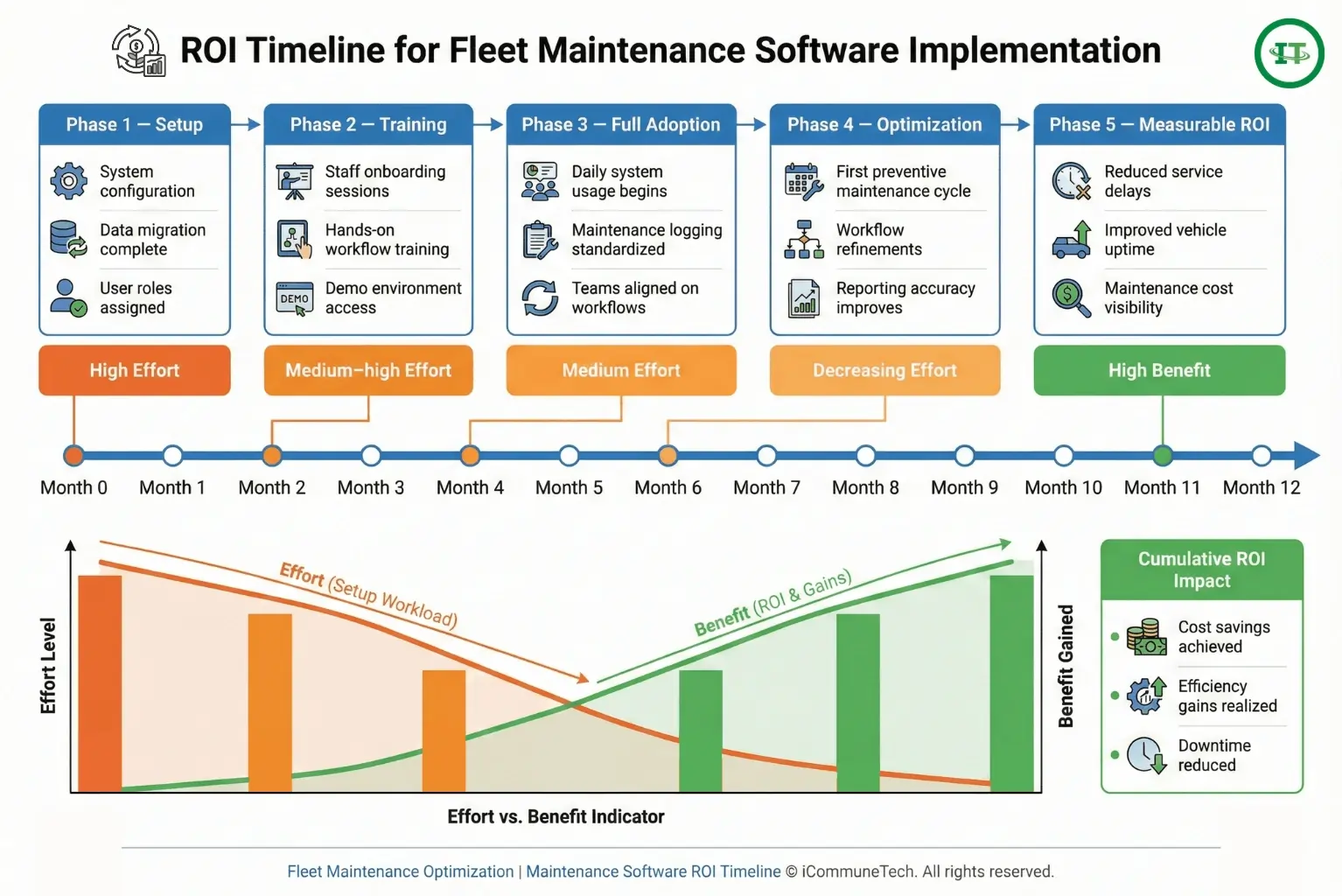
Built-in onboarding resources give managers, mechanics, and drivers a consistent reference when questions arise. Over time, this structure builds confidence across teams. Regular system use improves consistency, even when learning curves differ across roles.
How Software Integrations Drive Fleet Maintenance Success and Impact on Business Growth
Workflows can falter when service records, inventory, telematics, and fuel tracking operate in separate systems. But integrating features of a fleet management system centralizes maintenance, inventory, and telematics, boosting efficiency and growth.
Integrating these tools with small fleet maintenance software, along with API and ERP connections, centralizes data and streamlines operations. Managers gain clearer insights into vehicle performance, service needs, and operational trends, reducing errors and inefficiencies.
Connecting maintenance schedules to actual vehicle use, inventory levels, and costs ensures more accurate planning. Integrated systems improve reliability, reduce missed services, and support cost management. Over time, these connected workflows enhance fleet efficiency and contribute to broader business performance and competitive positioning.
Integration, Reporting, and Long-Term Fleet Health
Data from telematics, fuel, and inventory systems is scattered, limiting clear fleet oversight. Integrating these tools with small fleet maintenance software unifies information into a single operational view. This consolidation enables fleet analytics that surface usage patterns, service history, and repair trends over time.
Unified data supports proactive maintenance decisions instead of reactive fixes. When reviewed consistently, fleet data reveals trends that individual records cannot show. Small fleet maintenance software generates reports on downtime, part usage, service costs, and recurring repairs.
Managers use these insights to identify component wear and performance decline earlier. This visibility supports better planning, budgeting, and maintenance timing. Over time, data-driven decisions contribute directly to vehicle lifespan extension, reducing premature replacements and unexpected failures.
Maintaining this analytical perspective improves fleet reliability. Benefits compound gradually, even when improvements vary across vehicles or operating conditions.
Reporting and Analytics Tools for Small Fleet Operations
- Centralized Operational Intelligence
Fleet operations generate data from service activities, parts usage, fuel consumption, and telematics systems. Small fleet maintenance software brings this information together, allowing managers to monitor KPIs, repair patterns, fuel efficiency, and downtime metrics from a centralized platform. - Actionable Insights Through Dashboards and Reports
Managers can explore operational priorities using dashboards or fleet operational reports for deeper analysis. This visibility helps decision-makers evaluate performance trends with confidence rather than relying on assumptions. - Metric-Based Operational Decisions
Regular review of reports highlights evolving maintenance needs, changes in vehicle performance, and shifts in driver behavior. Scheduling, parts ordering, and cost control decisions become more predictable when supported by concrete fleet metrics.
Extending Vehicle Lifespan Through Consistent Maintenance
Fleet availability depends on consistent maintenance, though outcomes can vary. Regular inspections identify early wear, while some issues emerge despite scheduled servicing. Managers tracking service history and usage patterns can intervene before small problems escalate into costly repairs.
Repair records, service history, and component details sit in different places across a fleet. Small fleet maintenance software brings this information together, although patterns still take time to emerge.
As teams review the data, maintenance timing may be adjusted, or vehicle condition safeguarded, sometimes with resale considerations in mind. Cost reductions and longer vehicle life tend to follow, supporting consistent operations and sustained asset value rather than immediate results.
Fleet Maintenance Spreadsheets Versus Dedicated Software
- Operational Limits of Spreadsheets as Fleets Grow
| Spreadsheet Limitation | Operational Impact as Fleets Scale |
|---|---|
| Manual data entry | Increases the risk of missed services and delayed maintenance updates |
| Version conflicts | Creates inconsistent records across teams and locations |
| Files are spread across systems | Reduces visibility into fleet-wide maintenance status |
| Limited automation | Makes it difficult to maintain accurate schedules as the vehicle count grows |
| No real-time updates | Prevents timely maintenance decisions and early issue detection |
- Structured Maintenance Workflows With Dedicated Platforms
Dedicated platforms introduce structure where spreadsheets create gaps in fleet maintenance workflows. With small fleet maintenance software, service records remain centralized and up to date, reminders align with real vehicle usage, and updates reflect daily activity without delays. - Stabilized Reporting and Deliberate Maintenance Planning
As teams assess alternatives, platform comparison becomes critical to ensure features align with fleet size and maintenance complexity. Reporting stabilizes as information remains consistent across small fleet vehicle maintenance software, allowing maintenance planning to become more deliberate over time. - Improved Accountability Without Added Complexity
This transition strengthens uptime, improves cost control, and reinforces accountability across maintenance operations. These benefits are achieved without increasing operational burden, supporting smoother workflows as fleet demands evolve.
Upgrading From Fleet Maintenance Spreadsheets to Digital Tools
Upgrading from spreadsheets to digital tools marks a shift from manual tracking to controlled maintenance planning. Spreadsheets depend on constant updates and individual discipline. This increases the risk of missed services as vehicle count or usage rises.
Small fleet maintenance software replaces static files with live records that update as work is completed. Service intervals align with mileage, engine hours, or operating conditions rather than assumptions.
Data becomes accessible across roles without duplication or version conflicts. With small fleet vehicle maintenance software, alerts, service history, and cost tracking, stay connected in one system. The transition reduces errors, improves visibility, and supports consistent decision-making as fleet demands grow.
Best Small Fleet Maintenance Software Platforms Compared
- Evaluating Platforms Based on Operational Fit
Selecting the right small fleet maintenance software requires comparing pricing structures, feature depth, and support quality. The table below provides a clear overview of leading platforms, helping small fleet operators identify solutions that align with their operational needs and maintenance complexity.
| Platform | Pricing | Feature Depth | Support Quality | Best Fit |
|---|---|---|---|---|
| iCommuneTech | Quote-based | Broad maintenance alerts, GPS tracking, predictive maintenance, fuel & driver behavior analytics, integration capabilities | Moderate to strong demo and onboarding options available | Fleets needing integrated fleet and maintenance insights across operations |
| RTA Fleet360 | $6–8 per asset/month (tiered) + add-ons | Very deep preventive maintenance, work orders, inventory, analytics, APIs/telematics integrations | Strong online training, professional services, and consulting are included at higher tiers | Fleets needing robust maintenance tracking and long-term lifecycle management |
| Fleetio | $4–10 per vehicle/month | High maintenance, inspections, parts/inventory, reporting, integrations | Comprehensive free trial, onboarding specialists, phone/email support | Small to mid-sized fleets wanting strong maintenance tools with mobile access |
| Samsara | Quote-based, includes hardware + software | Moderate basic maintenance features plus telematics and safety data | Good, multi-channel support, especially for connectivity hardware | Fleets prioritizing telematics and connected operations |
| AUTOsist | $6 per vehicle/month, minimum ~$59 total | Basic work order management, scheduling, DVIR forms, parts tracking | Standard documentation and typical support channels | Budget-conscious small fleets needing essential maintenance tools |
Choosing Maintenance Software for Small Truck Fleets
Choosing the right platform requires evaluating pricing, feature depth, and support quality. Many fleets begin by weighing all-in-one vs point tools, opting for basic maintenance scheduling and service logs to manage early costs. This approach helps keep vehicles sale-ready without unnecessary system overhead.
As operational needs grow, feature requirements expand. Automated alerts, flexible dashboards, and mobile access improve service timing and reduce wear that accelerates depreciation. At this stage, fleets reassess integrated vs dedicated platforms, especially when diagnostics, APIs, or accounting systems must connect with maintenance data.
Feature depth remains critical. Strong platforms manage work orders, inventory thresholds, supplier tracking, and reporting. This creates a complete service history tied to each vehicle’s condition. Modular designs allow teams to activate only what they need, preserving usability while controlling long-term ownership costs.
High-quality support, including guided onboarding and training, ensures teams apply small fleet maintenance software effectively and protect asset value over time.
Evaluating All-in-One Fleet Software Solutions Versus Point Tools
- Focused Capabilities and Lower Entry Costs of Point Tools
Point tools concentrate on a single function, such as inspections, work orders, or fuel tracking. They are typically faster to implement and lower in upfront cost, but fragmented data increases the risk of missed services, accelerated wear, and reduced vehicle lifespan and resale value. - Centralized Control Through All-in-One Platforms
All-in-one platforms centralize maintenance, inventory, compliance, and reporting within one system. Small fleet maintenance software aligns service schedules with actual usage and parts availability, preserving vehicle condition, avoiding major repairs, extending replacement cycles, and supporting depreciation control. - Matching Platform Choice to Fleet Growth Stage
For small fleets with limited complexity, point tools may be sufficient. Fleets operating under uptime or total cost of ownership pressure benefit more from unified platforms that ensure operational consistency and protect asset value as demands increase.
Integrated Fleet Management Suites Versus Dedicated Maintenance Platforms
- Breadth of Visibility With Integrated Fleet Suites
Integrated fleet management suites combine dispatch, fuel, compliance, tracking, and maintenance into a single system. While integrated suites offer broad operational visibility, maintenance depth is often limited. Simplified inspection rules, limited service logic, and basic parts tracking capture less historical detail over a vehicle’s lifecycle. - Maintenance Precision With Dedicated Platforms
In contrast, small fleet maintenance software focuses exclusively on service execution. Work orders, service intervals, parts usage, and repair history remain tightly connected, helping preserve vehicle condition and slow depreciation over time. - Choosing Based on Uptime and Asset Value Priorities
For fleets where uptime and retained value are critical, small fleet vehicle maintenance software supports stronger maintenance discipline. It lowers lifetime ownership costs and keeps vehicles in better condition at replacement, while integrated suites are better suited for operations where maintenance is only one of several priorities.
Conclusion
The future of small fleet maintenance software is rooted in predictive, data-driven insights that transform how fleets operate. By combining real-time telematics, AI in fleet management, and integrated reporting, managers can anticipate service needs. They can optimize parts usage and extend vehicle lifespans while minimizing downtime.
Actionable steps include setting dynamic maintenance schedules based on actual usage. They include automating alerts for emerging mechanical issues and benchmarking performance against fleet KPIs. Adopting these forward-looking strategies ensures that small fleet maintenance software becomes a strategic growth tool. It helps fleets remain agile, cost-efficient, and resilient in an increasingly competitive operational landscape.
Ready to Streamline Your Fleet Maintenance and Reduce Downtime?
Discover how iCommuneTech’s small fleet maintenance software automates service scheduling, tracks parts, and monitors vehicle health. All in one system, without disrupting daily operations.
Take control of your fleet’s performance.

Irshad Pathan


Web Development Expert
Irshad is a senior technical expert at iCommuneTech. He manages the iCommuneTech's Web Development Team, and has hands-on expertise in web development, Laravel development, Logistics, fleet management, and Supply Chain Management. He mentors the in-house team and enjoys describing his experience in words.
Read More Insights By Irshad →