Procurement Software: A System Streamliner
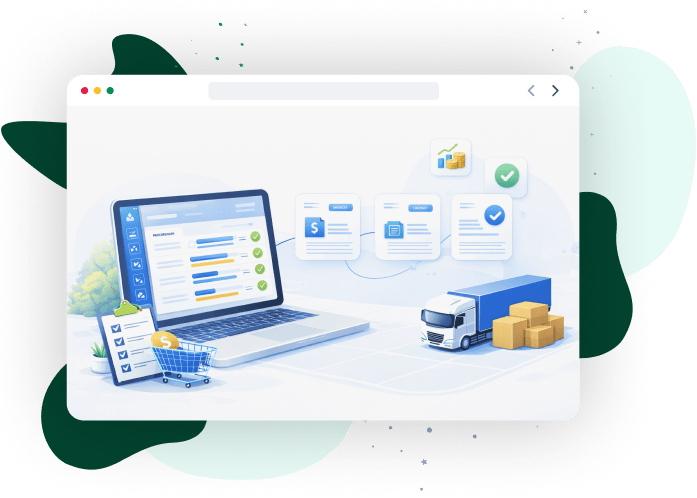
- The procurement management platform unifies source-to-pay (S2P) workflows across planning, sourcing, purchasing, invoicing, and payment coordination.
- Synchronize procurement planning with demand alignment, budget controls, and structured approval workflows.
- The platform improves supplier selection and management through qualification controls, performance tracking, and sourcing automation.
- Automates documentation across requisitions, purchase orders, contracts, and invoices to reduce manual handling.
- Enables real-time spend monitoring, analytics, and performance visibility across categories, suppliers, and business units.
- The system strengthens compliance through audit-ready records, governed approvals, and policy-aligned procurement processes.
- The software supports adoption through standardized workflows, integrated data flows, and unified operational control.
How iCommuneTech Helps IT Product Companies Deliver New Products Fast Enough?
Release cycles slow when architecture limits reuse, integrations stall, and documentation remains manual. Our embedded engineering support helps product teams accelerate procurement software delivery. The support expands source-to-pay, supplier management, and spend monitoring capabilities within the product.
The platform extends existing systems with procurement planning, automation,and analytics capabilities.
Accelerates supplier selection, documentation flows, and real-time spend visibility features.
Integration-ready data models improve system stability, support expansion and mitigate implementation risk.
Supports rapid adoption across distributed product environments through modular system design.
“The new portal transformed our operations – faster processing, automated rates, ticket management, and now seamless invoice payments. The flexibility for clients and admins to manage payments has been a game-changer.”

What Capabilities Can Your Procurement Management System Gain?
Siloed data and rigid workflows in legacy procurement management systems limit adoption, restrict performance visibility, and weaken compliance across source-to-pay workflows.
iCommuneTech enables procurement management system capabilities spanning smart procurement AI, automated workflows, unified spend tracking, supplier management, and API-first integration extensibility.
How Procurement Software Benefits Both You And Your Client’s Business?
Fragmented procurement environments create technical debt, limit performance, stifle user adoption, and degrade compliance integrity across distributed operations. The procurement software strengthens spend control, improves real-time visibility, drives systematic adoption, and compliance across every client touchpoint.
Accelerated TCO Reduction
The platform reduces the total cost of ownership by reducing operational overhead, optimizing automated workflows, and enforcing programmatic fiscal governance across all procurement cycles.
Find Hidden Savings
Find hidden cost-saving opportunities through multi-variant analytics, automated supplier benchmarking, and real-time monitoring across procurement data architecture.
Platform Agnostic Design
Platform-agnostic design supports procurement software adoption through flexible integration across ERP, finance, and supply chain systems without performance disruption.
Proven Procurement Framework
Proven procurement framework ensures compliance integrity and peak performance through structured source-to-pay logic and standardized architectural practices across the procurement management system.
High Adoption Rates
High adoption rates improve procurement software performance through standardized navigational logic, intuitive interface architecture, and consistent system usability across distributed enterprise teams.
Multi-Lingual & Local
Multi-lingual and localized support optimizes procurement software adoption across global regions through localized interface schematics, language coverage, and compliance-aligned procurement management system operations.
Compliance & Control
Compliance and control strengthen procurement software performance through policy-based approval logic, immutable audit trails, and governed procurement management system documentation.
Frictionless Transactional WorkFlows
Frictionless buying flows improve procurement software adoption through simplified requisition logic, accelerated approvals, and streamlined procurement management system purchasing cycles.
Zero-Touch Invoicing
Zero-touch invoicing improves procurement software performance through automated invoice data capture, algorithmic three-way matching, and validation across procurement management system workflows.
Faster AP Lifecycle Transformation
Faster AP transformation improves procurement software performance through automated reconciliation, intelligent invoice routing, and reduced processing latency across the procurement management system and financial stacks.
Unified Spend Telemetry
Complete spend visibility strengthens procurement software compliance and performance through real-time spend tracking, granular multi-variant category analysis, and procurement management system dashboards.
Right-Person Approvals
Right-person approvals improve procurement software compliance through rule-based routing and controlled authorization protocols across procurement management system approval hierarchies.
Fewer Manual Tasks
Fewer manual tasks improve procurement software performance through end-to-end workflow automation, documentation handling, and reduced manual intervention across procurement management system execution layers.
Budget Control Tools
Budget control tools strengthen procurement software compliance through threshold alerts, planned spend tracking, and procurement management system financial governance.
Equip Procurement Teams
Equipping procurement teams improves procurement software adoption through structured workflows, performance insights, and procurement management system decision support tools.
How Do We Transform Your Procurement Management System?
Disconnected procurement management system processes create visibility gaps, delay decisions, and weaken compliance across sourcing, purchasing, invoicing, and supplier coordination. The transformation approach strengthens procurement management system performance by synchronizing predictive planning, workflow automation, real-time tracking, compliance, and analytics across the complete source-to-pay lifecycle.
Strategic Procurement Planning
Strategic procurement planning improves procurement management system performance by aligning demand signals from sales forecasts and product roadmaps with spend forecasting and capacity planning decisions.
Supplier Selection
Supplier selection improves procurement management system performance through automated pre-qualification gates, data-driven supplier telemetry, and RFP management that accelerates vendor shortlisting cycles and reduces procurement cycle time.
Purchase Requisition Management
Purchase requisition management improves procurement management system performance through schema-based templates, logic-driven auto-routing, and catalog links that convert validated requests into purchase orders via straight-through processing, eliminating manual intervention and reducing back-and-forth tickets.
Purchase Order Management
Purchase order management improves procurement management system performance through automated PO generation, bulk grouping for volume-based discounts, real-time status tracking, and direct supplier delivery confirmations that reduce transactional exceptions and clarify procurement commitments.
Invoice Processing
Invoice processing improves procurement management system performance through 2-way and 3-way matching, automated resolution protocols, and exception workflows that shrink AP cycle times and reduce duplicate payment risks.
Purchase Document Storage
Purchase document storage improves procurement management system compliance through searchable, linked repositories for POs, invoices, and contracts, with metadata indexing and audit trails that simplify audits and data migrations.
Catalog Management
Catalog management improves procurement management system performance through supplier-managed or buyer-managed catalogs, SKU mapping, and logic-based approval gates that enforce standardized purchasing protocols and reduce maverick spend.
Spend Tracking
Spend tracking improves procurement management system performance through dashboards, threshold alerts, and committed spend reporting that provide finance and product teams with current visibility for cash-flow decisions.
Supplier Performance Monitoring
Supplier performance monitoring improves procurement management system performance through real-time KPI tracking, including OTD, defect density, and lead time variance, supported by automated risk signal triggers and corrective action workflows that ensure vendor-network predictability and performance.
Analytics And Reporting
Analytics and reporting improve procurement management system performance through scheduled and ad-hoc reports, drilldowns, and ML-driven anomaly detection that identify cost optimization opportunities and operational bottlenecks across the S2P data layer.
Vendor Portal (e-Procurement)
Vendor portal e-procurement improves procurement management system compliance through vendor onboarding, catalog uploads, PO acknowledgements, and invoice submission in one portal, reducing email churn and strengthening supplier compliance.
Security And Compliance
Security and compliance strengthen procurement management system performance through role-based access control (RBAC), multi-layer encryption, audit logs, and compliance workflows that enforce policy-aligned guardrails across the S2P lifecycle and reduce regulatory risk.
Driving Measurable Results Across Industries
From automating manual calculations to modernizing legacy infrastructure, we build software that directly impacts the bottom line. Our custom solutions consistently reduce operational costs and accelerate process efficiency.
View Our Case Studies
Integration, Customization, And Platform Security In Procurement Management
ERP (Enterprise Resource Planning)
The procurement platform integrates with enterprise resource planning systems to automate purchase order syncing, supplier data alignment, and financial updates while preserving data accuracy across source-to-pay workflows.
CRM (Customer Relationship Management)
The procurement platform integrates with CRM systems to synchronize upstream demand signals, link contracts, and align supplier communication with customer-driven procurement planning.
BI (Business Intelligence)
The procurement platform integrates with business intelligence systems to automate spend data aggregation, analytics, and anomaly detection, improving visibility and decision integrity.
Inventory Management System
Inventory management system integration improves procurement management system performance through automated stock level monitoring, replenishment triggers, and material availability visibility across integrated purchasing workflows.
Warehouse Management System
Warehouse management system integration improves procurement management system performance through automated goods-receipt validation, real-time inventory movement updates, and delivery confirmations linked with purchase orders.
Finance Systems
Finance systems integration improves procurement management system performance by automating budget checks, payment status tracking, ledger synchronization, and financial reporting across procurement transactions.
Accounts Payable Management System
Accounts payable management system integration improves procurement management system performance by automating invoice capture, validation, matching, and payment processing across source-to-pay operations.
Build vs Buy: Should You Develop A Procurement Management System Or Buy A SaaS Subscription?
Workflow complexity, regulatory compliance mandates, architectural scalability, and legacy infrastructure investments dictate build vs buy decisions across procurement management system strategy. A structured evaluation of complexity, compliance scope, scale, and total cost of ownership helps organizations plan a procurement platform roadmap with maximum systemic clarity.
Technical Decision Matrix
- Workflow complexity across approvals, sourcing, contracts, and supplier coordination
- Compliance requirements across regulated procurement environments and audit specifications
- Scale across users, entities, suppliers, and high-velocity transaction volumes
- Existing investments across enterprise systems, data models, and integrations
- Long-term total cost of ownership across recurring SaaS subscriptions, customization, and maintenance
At-a-glance total cost of ownership comparison
| Cost Area | Off-the-Shelf SaaS Subscription | Custom Development |
|---|---|---|
| Upfront investment | Low entry subscription fees | Higher initial capital expenditure |
| Customization scope | Limited configuration | Full customization control |
| Integration effort | Connector-based integrations | API-led deep integrations |
| Operating cost | Recurring subscription per user | Controlled operating expenses |
| Maintenance model | Vendor-managed updates | Managed maintenance cycles |
| Scalability impact | Cost increases with scale | Scale aligned with architecture |
ROI example
Custom development supports workflow ownership, deeper integration, and controlled performance at scale.
SaaS subscription: 120 users × $70 monthly license = $8,400 monthly operating cost
Annual spend: $100,800 without deep customization or workflow ownership
Custom development: $240,000 initial build with $40,000 annual maintenance
Three-year horizon: Custom total $360,000 versus SaaS $302,400 with scaling limits
When to choose custom development
Complex procurement workflows necessitate tailored approval logic and asynchronous supplier coordination beyond SaaS configurations
Compliance controls demand deep audit tracking, policy enforcement, and data governance
Multi-entity operations require a unified procurement management system architecture capable of multi-tenant data isolation and cross-entity reporting
Existing enterprise systems require deep API-first integration across legacy ERP, CRM, and SCM procurement workflows
Long-term total cost of ownership favors controlled infrastructure operating costs over the compounding expense of recurring subscription scaling
Development Timeline For A Custom Procurement Software
Unstructured timelines delay procurement system delivery, create scope drift, and weaken rollout performance, which is why a phased development structure is critical. A structured, multi-sguide-tage engineering approach optimizes delivery velocity through structured milestones, defined technical deliverables, and system-wide integration coordination.
Discovery (2–4 weeks)
Requirements mapping, workflow analysis, integration planning, and scope definition. Deliverables include requirement documents, architecture outline, and feature prioritization.
Design (3–6 weeks)
Platform architecture, data models, UX wireframes, and process flows aligned with the procurement lifecycle. Deliverables include wireframes, architecture diagrams, and API design specifications.
MVP development (8–12 weeks)
Core procurement management system modules built across requisitions, approvals, supplier data, and spend tracking. Deliverables include functional MVP release, core APIs, and initial test coverage.
Integrations (4–8 weeks)
Integration with enterprise resource planning, finance systems, and supplier data pipelines. Deliverables include integration connectors, data sync validation, and API documentation.
Testing (3–6 weeks)
Functional validation, performance checks, security testing, and workflow stability reviews. Deliverables include test plans, issue logs, and validated release candidates.
Pilot rollout (2–4 weeks)
Controlled deployment across selected teams with monitored procurement workflows. Deliverables include pilot feedback reports, performance metrics, and stability validation.
Full launch (4–10 months total timeline, depending on integrations)
Enterprise-wide rollout aligned with procurement management system adoption strategy and compliance readiness. Deliverables include production deployment, onboarding documentation, and operational readiness checks.
Post-launch evolution (continuous)
Performance tuning, analytics expansion, workflow refinement, and feature scaling. Deliverables include an enhancement roadmap, performance reviews, and integration upgrades.
Procurement Software Development Costs
Procurement software development costs vary based on scope, integration density, data complexity, and performance benchmarks across procurement management system architecture. Tailored pricing aligns procurement software development costs with project scope, business ROI goals, and long-term platform performance outcomes.
The cost calculator estimates investment ranges based on modular selection, workflow logic complexity, integration depth, user scaling, and the chosen deployment architecture. The calculator evaluates sourcing, procure-to-pay depth, analytics needs, and compliance requirements to estimate engineering effort, architecture scope, and delivery timelines.
High-Level Development Timeline Influences Investment Distribution:
Final development costs depend on automation depth, algorithm complexity, and the number of required system integrations across the procurement ecosystem.
Case Studies: Enterprise Procurement Transformation Success
Client: Masdar City
Technology: Ivalua Source-to-Pay Platform
The procurement function was operating across fragmented legacy systems with manual approvals and limited spend visibility. The transformation consolidated sourcing, contract lifecycle management, approvals, supplier governance, and spend analytics into a unified AI-enabled procurement management platform.
The engagement demonstrates how centralized procurement architecture and AI-enabled automation can deliver measurable efficiency, compliance control, and operational acceleration in complex enterprise environments.
Check more success storiesMeasured impact:
Discuss Building Procurement Software
Align procurement workflows with platform architecture, compliance requirements, and long-term product roadmap goals. Identify where custom procurement software can improve spend control, automation depth, and operational visibility.